

Why does jewelry turn skin green: causes and fixes
That green stain on your skin after wearing a favorite ring isn't a sign of cheap jewelry or an allergy; it's simply a harmless chemical reaction. Think of it like a tiny, temporary science experiment happening right on your skin!
The Case of the Mysterious Green Finger
Have you ever slipped off a ring or bracelet and found a weird green mark left behind? It's a super common thing, and it often sends people into a panic, wondering if their favorite piece is fake or if they're having some strange reaction.
Let's clear the air: that green tint is almost always harmless. It’s not a sign that your jewelry is low-quality, and it’s definitely not a reflection on you!
So, what's really going on? It all boils down to a simple chemical reaction called oxidation. The main culprit here is usually copper. You see, metals like sterling silver, brass, and even some gold alloys are often mixed with copper to make them stronger and more durable for everyday wear.
When that copper comes into contact with things like sweat, the natural oils on your skin, or even the lotions and soaps you use, it reacts. This reaction creates a thin layer of what's known as copper salts—and those salts just so happen to be green. It's the exact same science that gives the Statue of Liberty her famous greenish hue!
In this guide, we're going to dive into the chemistry behind it all and explore what makes some people more prone to the "green finger" effect than others.
Here's what we'll cover:
- The real science of copper oxidation (and why it’s not as scary as it sounds).
- How your personal body chemistry, sweat, and cosmetics can speed things up.
- A simple way to tell the difference between a harmless stain and a true metal allergy.
- Practical, easy tips to keep your jewelry from leaving its mark.
The biggest thing to remember is that this green stain is just temporary and totally safe. It’s just a fascinating little interaction between your body and the metals in your jewelry, and it's something you can easily manage.
Quick Guide to Why Your Skin Turns Green
To make it even simpler, here's a quick rundown of the main factors at play when your jewelry leaves a green mark.
| Cause | What Happens | Is It Harmful? |
|---|---|---|
| Metal Oxidation | Copper in the alloy reacts with air and moisture, forming a green layer (copper salts). | No, it's a natural chemical process. |
| Skin pH & Sweat | Acidic sweat and your skin's unique pH level can accelerate the oxidation reaction. | No, but it can make you more prone to staining. |
| Cosmetics & Chemicals | Lotions, soaps, and perfumes can react with the metals in your jewelry. | No, it's just a chemical interaction. |
Understanding these basics is the first step to preventing that green glow for good!
Of course, the absolute best way to sidestep this whole issue is to choose jewelry made from materials that are designed to resist these reactions from the start. That’s why we’re so passionate about creating pieces that you can live in without a second thought.
At Wen-Kelli, our jewelry is water-proof, sweat-proof, and designed to be completely tarnish-free. That means your skin stays clear and your accessories stay shining bright. It's time to say goodbye to green stains and hello to gorgeous, worry-free style.
Meet the Main Culprit: Copper Oxidation
So, what's the deal with that mysterious green hue on your skin? It's not some weird magical curse; the answer is surprisingly simple and boils down to one very common metal: copper. This metal is the undisputed champion of turning skin green, and it pops up in more jewelry than you’d probably guess.

The whole thing is a classic chemical reaction called oxidation. Think about it this way: when copper meets the elements—oxygen from the air, sweat from your skin, and even the natural acids your body produces—it starts to corrode. This corrosion creates a thin film of green particles, which are basically copper salts like copper carbonate.
This isn't your skin permanently changing color! Those tiny green particles are just rubbing off the jewelry and onto you, leaving a temporary stain that washes right off. It’s a totally natural and harmless process.
A Monumental Example of Oxidation
If you want to see copper oxidation on a grand scale, look no further than the Statue of Liberty! She wasn't always that famous shade of seafoam green. When she first arrived in the United States, she was a shiny, brilliant copper brown, just like a brand-new penny.
Over many years, the statue's copper skin reacted with rain, air, and humidity. This slow-burn chemical reaction created the stunning greenish-blue patina she's known for today. The exact same thing is happening on a tiny scale with your favorite ring!
Just like Lady Liberty, the copper in your jewelry is simply reacting to its environment. Your skin—with all its moisture, oils, and sweat—is the perfect catalyst for this mini-reaction, leaving behind that tell-tale green mark.
Why Is Copper So Common in Jewelry?
It might seem strange, but copper is often intentionally mixed into even high-quality jewelry. It’s a vital part of many metal alloys, which are just mixtures of different metals created to make the final product stronger and more durable. Pure gold and silver, for example, are way too soft to stand up to daily wear and tear on their own.
In fact, copper is statistically the most common metal to cause skin discoloration from jewelry. Even something as popular as sterling silver usually contains 7.5% copper just to make it hard enough to wear. With sterling silver making up nearly 50% of all silver jewelry sales in the United States, it’s no wonder so many people have experienced the green finger phenomenon! You can dive deeper into this and learn about jewelry metals on Jewelry-Auctioned.com.
This means that even some of your pricier pieces might leave a mark now and then. But don't despair, because there's a simple fix. The trick is to opt for jewelry made from materials specifically engineered to resist this reaction. That's exactly what we focus on at Wen-Kelli—our pieces are water-proof, sweat-proof, and tarnish-resistant, so you can wear them with total confidence and never worry about that green stain again.
How Your Body Chemistry Hits the Gas on the Green Reaction
Have you ever let a friend borrow a ring, and it turns their finger green but leaves yours totally fine? It’s not some strange sorcery—it’s just biochemistry in action! While copper oxidation is the chemical villain here, your own unique body chemistry is the one flooring the accelerator on that greening process.
Think of your skin as its own little ecosystem. Just like some climates get more rain, some people's skin is naturally more acidic. This acidity, measured by its pH level, can seriously speed up how fast copper corrodes. If your skin leans toward the acidic side, you're basically creating the perfect conditions for those green copper salts to form and stain your skin.
Sweat, Lotions, and Potions: The Everyday Culprits
Another huge player in this game is sweat. Your sweat isn't just water; it's a salty, slightly acidic cocktail that's practically a super-soldier serum for oxidation. When you work out or just exist on a hot day wearing your favorite piece, you're giving that metal a bath in the perfect solution to kick that reaction into high gear.
And let’s not forget your daily routine. The products you slather on your skin can be secret accomplices in the Case of the Green Finger.
- Lotions and Creams: So many skincare products are packed with chemicals that can react with the metals in your jewelry. They can wear down protective coatings and leave the copper totally exposed.
- Perfumes and Hairsprays: These are often loaded with alcohols and other harsh chemicals that are notorious for tarnishing metals and fast-tracking that green tint.
- Soaps and Sanitizers: Even washing your hands can be a problem, especially if you don't dry your hands and jewelry completely afterward. Moisture is a key ingredient for this reaction!
Here's the bottom line: The mix of your skin’s natural chemistry and the products you use creates a personalized recipe for that green stain. This is precisely why the same ring can affect you and your best friend in completely different ways.
Basically, anything that brings moisture, acids, or chemicals to the party is going to make that green hue much more likely to show up. Once you start to understand your personal triggers, you can take back control.
Of course, the easiest way to sidestep this whole chemical headache is to choose jewelry built for real life. At Wen-Kelli, we think you should be able to live your life without worrying that your body chemistry or favorite lotion will ruin your look. Our pieces are specifically designed to be water-proof, sweat-proof, and tarnish-resistant, which is why Wen-Kelli's jewelry doesn't turn green. It’s made to stay brilliant, no matter what your day throws at it.
Green Stain or Allergic Reaction?
So, you take off your favorite ring and… yikes. A green ring of its own is staring back at you from your finger. It's a jarring sight, but before you panic, it's super important to know what you're dealing with. Is it just a harmless stain or is your body trying to tell you something with a full-blown allergic reaction?
Let's break it down. One is a simple, temporary mark, while the other is your immune system waving a big red flag.
Is It an Allergy or Just a Stain?
That green tinge is almost always just a harmless stain. It’s the direct result of the copper oxidation we talked about earlier—basically, the metal having a little chemical party with your skin's natural oils, sweat, and the environment. The result? A greenish residue left on the surface of your skin.
This discoloration is purely cosmetic. It’s not itchy, it’s not painful, and it’ll usually scrub right off with a bit of soap and water. Think of it like grass stains on your jeans. Annoying? Yes. Harmful? Not at all.
An allergic reaction, however, is a whole different ballgame. The most common troublemaker here isn't actually copper, but another metal frequently mixed into jewelry alloys: nickel. A nickel allergy is incredibly common, causing a type of skin irritation known as contact dermatitis in up to 17% of women and 3% of men.
If you have a nickel allergy, your skin won't just be stained. It'll be angry. You'll see symptoms like:
- Redness and Inflammation: The skin looks irritated, turns red, and can even feel warm.
- Intense Itching: This isn't a passing thing; it’s a persistent, sometimes maddening, itch.
- Rashes or Blisters: You might develop a bumpy rash, dry, scaly patches, or even tiny, fluid-filled blisters where the metal touched you.
- Swelling: The area can get puffy, tender, and uncomfortable.
These symptoms are your body's immune system putting up a fight. They won’t just wipe away, and they’re a clear signal to take that piece of jewelry off, pronto.
This handy little chart shows how your own body chemistry and the products you use can fast-track that greening process.
As you can see, your unique makeup creates the perfect storm for a chemical reaction—but this is a world away from a true allergy.
Having trouble telling the difference? This table should help clear things up.
Identifying Your Skin's Reaction to Jewelry
| Symptom | Green Stain (Oxidation) | Allergic Reaction (e.g., Nickel Allergy) |
|---|---|---|
| Color | Green or black smudge on the skin's surface. | Skin appears red, inflamed, or discolored. |
| Sensation | None. It’s completely painless. | Intense itching, burning, or tenderness. |
| Texture | Skin feels normal, just stained. | May develop a rash, bumps, blisters, or dry patches. |
| Duration | The stain can be washed off with soap and water. | Symptoms persist for hours or days after removing the jewelry. |
| Swelling | No swelling or puffiness. | The area may become swollen and puffy. |
Hopefully, that makes it easier to diagnose what's happening. A stain is a nuisance, but an allergy is a health concern.
The key takeaway is simple: a green stain is just a harmless chemical reaction, but an allergic reaction is your body’s cry for help. If you're dealing with itching, redness, or a rash, it's time to stop wearing that piece of jewelry for good.
This is exactly why choosing jewelry designed with sensitive skin in mind is a game-changer. Here at Wen-Kelli, we're obsessed with creating pieces that are as kind to your skin as they are beautiful. That’s why Wen-Kelli's jewelry doesn't turn green or trigger irritation—it’s crafted to be water-proof, sweat-proof, and tarnish-resistant, so you can wear it with total confidence.
Your Action Plan for Stain-Free Skin
Ready to rock your favorite pieces without that dreaded green smudge? I thought so! You absolutely don't have to sideline your best accessories. The secret is simply knowing a few smart tricks to keep your skin and your jewelry looking incredible.
Think of this as creating a "safe zone" for your style. This is your game plan, full of easy-to-adopt habits that make a world of difference. When you put these strategies into motion, you stop that pesky chemical reaction before it even has a chance to start.
Build Better Jewelry Habits
Honestly, the easiest win is to get a handle on moisture and chemical exposure. It all comes down to being a little more mindful of when and where you wear your jewelry. You’d be amazed at how a few tiny tweaks to your daily routine can have such a massive impact.
A fantastic rule of thumb is this: jewelry should be the last thing you put on in the morning and the first thing you take off at night. Just adopting that one simple habit can sidestep a ton of common problems right out of the gate.
Here are a few more game-changing habits to work into your life:
- Remove Before Water: Always, always slip off your rings and bracelets before washing your hands, showering, swimming, or crushing a workout. Water and sweat are the biggest culprits behind copper oxidation.
- Apply Products First: Let your lotions, perfumes, and hairsprays dry completely before you put on your accessories. This keeps those chemicals from directly attacking the metal's surface.
- Keep It Clean: Give your jewelry a quick wipe-down with a soft cloth after wearing it. This removes the skin oils and sweat that speed up the greening process. For a more thorough refresh, check out our guide on how to clean jewelry at home.
Create a Protective Barrier
For those pieces you just can't part with but know are repeat offenders, it's time for a more direct approach. You can actually create a physical barrier that separates the metal from your skin—it's a super simple and effective fix.
This trick is a lifesaver for the inside of rings or the back of pendants, where the metal is in constant contact with you. You're basically sealing it off so it can't react.
The most popular DIY trick is to apply a thin coat of clear nail polish to the parts of the jewelry that touch your skin. Just paint it on, let it dry completely, and you're good to go! You'll need to reapply it every few weeks as it wears away, but it's an invisible shield that stops oxidation cold.
Of course, the best action plan is to choose jewelry that’s designed to resist these reactions from the get-go. That’s exactly what we're all about at Wen-Kelli. We believe you should be able to live your life without worrying about your accessories, which is why Wen-Kelli's jewelry doesn't turn green. Our pieces are specifically crafted to be water-proof, sweat-proof, and tarnish-resistant, giving you a truly effortless and beautiful experience.
Choose Jewelry That Will Never Turn Green
While all those prevention tips are great, the real game-changer is picking jewelry that simply can't cause the green-stain problem in the first place. Seriously, just imagine a world where you don't have to slip your rings off to wash your hands or think twice about wearing your favorite necklace on a sweltering day. That world is totally within reach when you know which materials to look for!
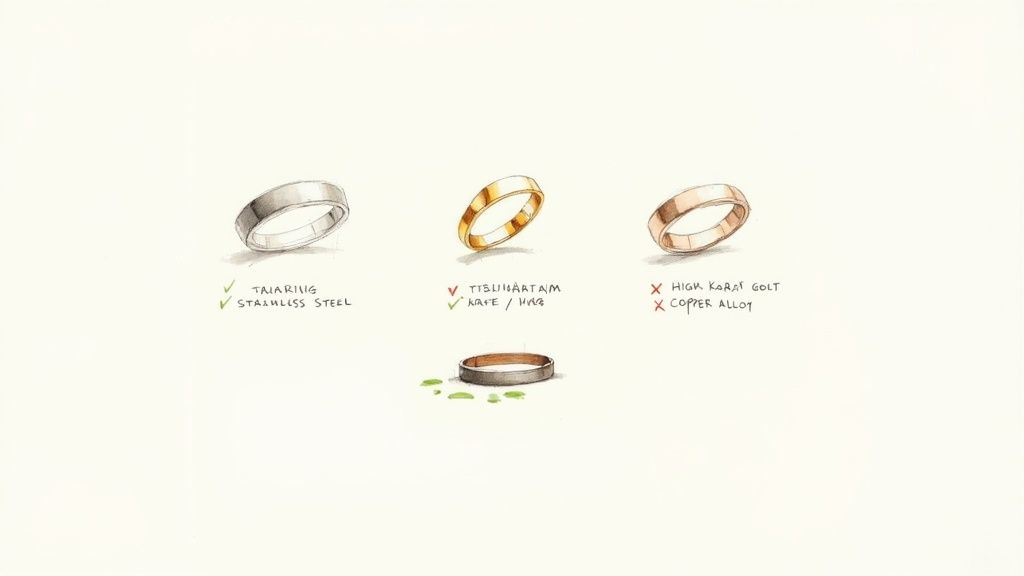
This is where the champions of worry-free accessorizing come in. We're talking about powerhouse metals that laugh in the face of oxidation. These materials are specifically built to resist the exact chemical reactions that leave behind that dreaded green tint, so your skin stays clear and your style stays on point.
Metals That Keep Your Skin Clear
If you’re officially over playing defense against green stains, it's time to start building your collection around these absolute heroes:
- Stainless Steel: This is the undisputed king of durable, carefree jewelry. It contains chromium, which forms a super-thin, invisible protective layer that literally stops oxidation in its tracks. That’s what makes it so incredibly resistant to rust, tarnish, and discoloration.
- Titanium: Unbelievably strong yet feather-light, titanium is another fantastic hypoallergenic choice. It won’t react with your skin or tarnish, no matter what you put it through.
- Platinum: Famous for its rarity and resilience, platinum is a premium precious metal that doesn't react with skin or moisture. It’s a surefire way to dodge any and all discoloration.
- High-Karat Gold: While lower-karat gold has more alloy metals (like that pesky copper), 18k gold or higher has a much purer gold content. This drastically reduces the chance of any kind of reaction.
The secret to a stain-free life is choosing jewelry designed for how you actually live. You shouldn't have to choose between your active lifestyle and your favorite accessories.
This philosophy is the absolute heart of everything we create at Wen-Kelli. We believe you deserve stunning jewelry that can keep up with your life, from a tough gym session to a spontaneous dip in the ocean. That’s exactly why Wen-Kelli's jewelry doesn't turn green.
Every single piece is brilliantly engineered to be water-proof, sweat-proof, and tarnish-resistant, directly solving every single problem we’ve talked about. With Wen-Kelli, you get the freedom to wear your style 24/7 without a single worry. You can dive deeper in our guide that answers the question, does stainless steel tarnish? It’s time to say goodbye to green stains for good and hello to effortless, everyday brilliance.
Your Top Jewelry Questions, Answered
Got a few more questions rattling around? Perfect! Let's dive into some of the most common things people wonder about when they see that dreaded green tint.
So, Is This Green Stain Actually Harmful?
Not in the slightest! I know it can look a little alarming, but that green mark is totally harmless. It’s simply the result of a normal chemical reaction.
Think of it as a temporary stain on the surface of your skin—nothing more. It's not an allergic reaction, definitely not an infection, and it’s certainly not a reason to panic. It's just... chemistry in action!
How Can I Get This Green Stuff Off My Skin?
Getting that green stain off is a piece of cake. First, take off the piece of jewelry that’s causing the issue.
Next, just wash the area with a bit of soap and warm water. For a really stubborn mark, a cotton ball with some rubbing alcohol or even a makeup remover wipe will do the trick in seconds. The stain will lift right off.
Can My Expensive Jewelry Turn My Skin Green, Too?
Oh, absolutely. This is a huge misconception! Seeing a green mark doesn't automatically mean your jewelry is cheap or low-quality.
Even very fine jewelry, like sterling silver or pieces made from 14k and 18k gold, contains copper. Jewelers mix copper into alloys to make precious metals like gold and silver stronger and more durable. While they have less copper than costume jewelry, a combination of your unique skin chemistry and a bit of sweat can still be enough to cause that green reaction, even with a pricey piece.
The most important takeaway is that a green stain is a matter of chemistry, not necessarily quality. The best solution is to choose jewelry made from materials inherently resistant to this reaction.
This is exactly why Wen-Kelli's jewelry doesn't turn green. We build our pieces using materials that are specifically water-proof, sweat-proof, and resistant to tarnishing. You get all the brilliance without any of the green, so you can go about your day without a second thought.
Ready for jewelry that keeps up with your life without leaving a trace? Explore the worry-free, tarnish-proof collection from Wen-Kelli and wear your style with total confidence. Shop now at wen-kelli.com.
