

Does Stainless Steel Tarnish: Truth About Jewelry Care
So, can stainless steel jewelry actually tarnish? The short answer is yes, but it’s probably not what you're picturing. Forget the dark, flaky mess you see on old silverware—when stainless steel loses its shine, it’s a whole different ballgame.
Its legendary resilience makes it one of the toughest materials out there, but even superheroes have their weaknesses.
What's the Secret Behind Stainless Steel's Shine?
Ever wondered what gives stainless steel its famous durability? It’s not magic; it’s some seriously cool chemistry. The key ingredient is chromium, an element that creates an invisible, super-powered shield on the metal's surface.
Think of it like a self-healing force field. As soon as the chromium is exposed to oxygen in the air, it forms a thin, stable film called chromium oxide. This passive layer is what stands between your beautiful jewelry and the environmental villains that cause rust and discoloration. Get a scratch? No problem. The layer instantly starts repairing itself, keeping the steel underneath safe and sound.
The Myth of the Invincible Shield
But here’s the thing: even the best force fields can be weakened. Under just the right (or wrong!) conditions, that protective shield can take a hit, and that's when you might notice your jewelry looking a little... off.
What most people call "tarnish" on stainless steel is really just temporary dulling or discoloration. It's worlds away from true corrosion or the dark patina that forms on other metals.
To get technical for a second, metallurgical standards require stainless steel to have at least 10.5% chromium to form that protective oxide layer. But even with that built-in defense, things like prolonged exposure to harsh chemicals, chlorides (think saltwater!), or strong acids can compromise the shield. The result? A temporary loss of that brilliant shine. You can dig deeper into the properties and market for stainless steel to see just how versatile this metal is.
We’ve all heard stainless steel is "tarnish-proof," but reality is a bit more nuanced. Let's clear up some common misunderstandings.
Stainless Steel Tarnish Myths vs Reality
| Common Myth | Scientific Reality |
|---|---|
| "Stainless steel is completely immune to tarnish." | It has incredible resistance, but harsh environments (like chlorine pools or bleach) can cause temporary surface discoloration. |
| "Any discoloration is permanent rust." | What looks like tarnish is usually a temporary dulling of the chromium oxide layer, not irreversible rust. It can typically be cleaned off. |
| "All stainless steel is the same." | Different grades (like 304 vs. 316L) have varying amounts of chromium and other elements, offering different levels of corrosion resistance. |
| "Water will make it tarnish immediately." | Everyday water exposure is fine! It's prolonged contact with saltwater, chlorinated water, or harsh chemicals that poses a risk. |
Ultimately, the idea that stainless steel is invincible is just a myth. It's incredibly strong, but not indestructible.
So, does stainless steel tarnish? It resists it like a champ, but certain environments can temporarily dull its luster. This isn't permanent damage—it's just a sign that its protective shield needs a quick clean and polish to get back to its brilliant self.
The Big Takeaway: Stainless steel doesn't tarnish like other metals. Instead, its protective chromium oxide layer can get temporarily dulled or discolored when exposed to harsh elements. Think of it as a cry for a good cleaning, not a sign of permanent damage.
Understanding Tarnish Versus Corrosion
It’s so easy to toss around words like 'tarnish,' 'rust,' and 'corrosion' as if they all mean the same thing. But in the world of metals and jewelry, they describe completely different battles your pieces might be fighting. Getting the distinction right is the first step to becoming a pro at jewelry care, because it tells you exactly how to handle any discoloration you spot.
Let's break it down with an analogy. Think of tarnish as a dusty film on a beautiful mirror. It makes the surface look dull and cloudy, sure, but it hasn't actually damaged the glass. A good wipe-down, and that mirror is back to its sparkling, reflective self.
That's tarnish in a nutshell. It’s a surface-level chemical reaction that simply dulls a metal's shine without affecting its strength or integrity. It's an aesthetic issue, not a structural one. Think of how sterling silver gets that dark, moody look over time—that's classic tarnish.
The Real Damage Dealer: Corrosion
Now, let's talk about corrosion. Imagine that same mirror, but this time it has a deep, spiderweb crack running through it. This isn't just a surface issue; the glass itself is fundamentally broken. No amount of polishing will ever fix that crack. The damage is permanent.
That’s corrosion. It's a far more sinister process where the metal itself literally starts to break down and degrade. The most famous villain in this story is rust—that flaky, reddish-brown stuff that forms when iron or steel meets oxygen and moisture. Unlike tarnish, corrosion eats away at the metal, causing irreversible damage.
Key Difference: Tarnish sits on top of the metal, affecting its appearance. Corrosion attacks the metal from within, affecting its integrity.
This is where stainless steel's superpower comes into play. Because it contains a minimum of 10.5% chromium, it forms an invisible, self-repairing shield on its surface. This "passive layer" is what fights off both tarnish and corrosion, making stainless steel so famously resilient.
Different Forms of Attack
While that chromium shield is a total rockstar, it's not completely invincible. Under specific conditions, certain environmental triggers can find a weak spot and cause localized corrosion. Knowing what these are helps you diagnose what's happening to your jewelry.
Here’s a quick rundown of the usual suspects:
- Pitting Corrosion: This is the most common one for jewelry. It happens when the steel is exposed to chlorides (think salt from sweat or seawater). It creates tiny, localized holes or "pits" that can go surprisingly deep into the metal.
- Crevice Corrosion: This one is sneaky. It loves to hide in tight spaces, like under a stone setting or where two pieces of metal join. Moisture gets trapped, can't evaporate, and starts causing trouble.
- General Corrosion: This is a more uniform attack across the entire surface, but it's pretty rare for jewelry. It’s usually caused by prolonged exposure to strong acids or chemicals.
For your stainless steel jewelry, pitting from salt is really the main thing to watch out for. But here's the good news: the slight discoloration you might occasionally see is almost always just a temporary issue with that protective layer, not a full-blown corrosion meltdown. With the right care, you can easily restore that brilliant shine and keep your pieces looking flawless.
What's Really Behind Stainless Steel Discoloration?
So, what are the real-world culprits that can steal the sparkle from your stainless steel? Think of that protective chromium oxide layer as a superhero's invisible force field. It’s incredibly tough, but certain everyday encounters are its kryptonite, weakening its defenses and causing that frustrating dullness.
Knowing what causes this is the first step to keeping your jewelry looking flawless. Once you know the enemy, you can easily protect your favorite pieces. Let's dig into the usual suspects.
The Chemical Culprits
Harsh chemicals are public enemy number one for your jewelry's shine. They launch a direct attack on that passive layer, throwing it off balance and leaving the metal underneath vulnerable to temporary discoloration.
You'll find the biggest offenders in some surprising places:
- Chlorine: This is the big one. Whether you're in a swimming pool, a hot tub, or using certain household cleaners, the high concentration of chlorine is aggressive enough to break down that protective shield. A single dip probably won't hurt, but repeated exposure is a recipe for a lackluster finish.
- Bleach: Just don't do it! Never, ever clean your jewelry with bleach. Its powerful oxidizing agents can cause immediate and serious discoloration.
- Strong Acids: While you probably aren't handling industrial acids, even things like a splash of lemon juice or vinegar can cause a reaction if left sitting on the surface for too long.
The Salty Saboteurs
Salt is another sneaky villain, especially in the form of chlorides. It specializes in causing a very specific type of localized corrosion called pitting—creating tiny, almost invisible spots on the surface. For your jewelry, the most common sources are things you encounter every day.
Believe it or not, one of the main sources is your own body! Sweat contains salt and minerals that can slowly eat away at the protective layer if left on your jewelry after a workout or a hot day. In the same way, a day at the beach is amazing for you, but the seawater and salty air create a highly corrosive environment for any metal.
This incredible resilience is exactly why other industries value it so much. In fact, roughly 60% of all food processing equipment is made from stainless steel, chosen specifically for its superior ability to fight off tarnish and corrosion. It's a multi-billion dollar industry where keeping surfaces pristine is everything.
Environmental and Lifestyle Factors
Sometimes, the threat isn't one single chemical but a combination of things from your daily life. This is where a little mindfulness goes a long way.
Think about these common scenarios:
- Cooking with Acidic Foods: Rocking a stainless steel ring while making a tomato sauce or a vinaigrette? Those little splashes can sit on the metal and cause trouble.
- Applying Lotions and Perfumes: The chemicals found in many cosmetics can leave a film on your jewelry. This film traps moisture and other grime right up against the steel's surface, which is never a good thing.
- Industrial Pollutants: It sounds extreme, but even air quality can play a part. In areas with high pollution, airborne contaminants can settle on surfaces and speed up discoloration. Studies show that a lack of industrial controls can contribute to environmental factors that tarnish even the toughest metals. You can learn more about how market trends reflect stainless steel's durability and its widespread use.
By recognizing these everyday triggers, you can easily sidestep them. This isn't about locking your jewelry away forever! It’s just about knowing when to give your pieces a quick break or a simple wipe-down to keep their force field strong and their shine brilliant.
Keeping Your Stainless Steel Jewelry Flawless
Alright, now that we've geeked out on what makes stainless steel so tough, let's get to the good stuff: keeping your favorite pieces looking as amazing as the day you first wore them. And I've got great news—it doesn't involve some complicated, expensive ritual. Seriously.
A few smart habits and a super simple cleaning trick are all you need to keep that brilliant shine going for years. This is all about proactive care, not last-minute panic. Think of it as a quick, satisfying ritual that protects the jewelry you love. The best part? You already have everything you need.
Your Go-To DIY Cleaning Method
First things first: step away from the harsh chemicals and abrasive scrubs. Those things are kryptonite to your jewelry's protective layer. The absolute best (and safest!) way to clean your stainless steel is with a gentle solution you can whip up in seconds. It’s perfect for washing away the daily grime, sweat, and oils that build up.
Here’s the simple, step-by-step process:
- Mix It Up: Grab a small bowl and add a few drops of mild dish soap (the classic blue Dawn is perfect for this) to some warm water. You're just looking for a little bit of light sudsiness.
- Give It a Soak: Pop your jewelry into the bowl and let it hang out for about five to ten minutes. This little bath does all the hard work for you, loosening up any gunk without you having to scrub.
- The Gentle Scrub: Take a soft-bristled toothbrush—a baby toothbrush is ideal here—and gently brush away any remaining dirt. Make sure to get into any little nooks, crannies, or detailed spots where grime loves to hide.
- Rinse It Clean: Hold your jewelry under warm, running water until all the soap is gone. You want to be thorough here because leftover soap residue can leave a dull film behind.
- Dry It Off: Pat your pieces completely dry with a soft, lint-free cloth. A microfiber or a dedicated jewelry-polishing cloth works wonders. Getting it totally dry is key to preventing any pesky water spots.
That’s it! This quick routine is usually all it takes to bring back that bright, polished shine. If you want a little extra sparkle, give your dry jewelry a final buff with a clean polishing cloth.
Proactive Habits for Lasting Shine
Honestly, the best way to keep your stainless steel looking brand new is to stop discoloration before it even has a chance to start. Weaving a few simple habits into your daily life makes a massive difference and means you'll have to clean your pieces way less often.
Here are the top habits to get into:
- Pools Are a No-Go: Chlorine is the number one enemy of that protective chromium layer. Always, always take your jewelry off before you jump into a swimming pool or hot tub.
- Wipe Down After Workouts: Sweat is salty, and that salt can be corrosive over time. After a good gym session or just a hot day, give your pieces a quick wipe with a soft cloth to get that residue off.
- Last On, First Off: This is a golden rule for all jewelry! Put your jewelry on after you’ve applied lotions, perfumes, and hairspray. This stops a chemical film from building up on the surface. And when you get home, take it off first.
- Store It Smartly: When you're not wearing your pieces, tuck them away in a soft pouch or a separate compartment in your jewelry box. This is a simple trick to prevent scratches from other items.
Following these easy tips ensures every piece, from your everyday rings to your favorite layered necklaces from our collection at Wen-Kelli, stays in absolutely pristine condition. It’s all about making those small, smart choices that protect your style and keep you looking sharp.
Why Not All Stainless Steel Is Created Equal
Have you ever noticed how some stainless steel pieces seem practically indestructible, while others start to look a bit sad after a few months? It all comes down to the "grade."
Think of it like baking a cake. You can follow the same basic recipe, but the one made with premium, high-quality ingredients is always going to taste richer and hold its shape better. The same goes for stainless steel. The grade is the recipe, and the specific mix of alloys determines everything from its strength and shine to how well it battles discoloration.
For jewelry that has to keep up with your busy life, getting the grade right is non-negotiable.
The Everyday Champion: 304 Stainless Steel
You've definitely seen 304 stainless steel before. It's the workhorse of the steel world, showing up in everything from kitchen sinks to the shiny trim on buildings. It’s a great all-rounder, known for its solid corrosion resistance and affordability.
But here’s its kryptonite: chlorides. Everyday things like saltwater, pool water, and even your own sweat contain chlorides that can cause a specific type of damage called "pitting." While it's perfect for a frying pan, it’s not the best choice for a ring you never take off.
The Unbeatable Upgrade: 316L Stainless Steel
This is where things get exciting. Say hello to 316L stainless steel, a grade so tough it’s often called "surgical grade" or "marine grade" steel. What makes it so special? It has a secret weapon in its recipe: molybdenum.
This powerhouse alloy, making up about 2-3% of the steel, gives it a massive upgrade in fighting off corrosion from chlorides.
Simply put, molybdenum makes 316L the undisputed champion for jewelry. It's specifically built to handle the corrosive assault from seawater, sweat, and harsh chemicals, ensuring your pieces stay brilliantly shiny for the long haul.
No matter the grade, a little TLC goes a long way. This quick guide breaks down the simple do's and don'ts for keeping your steel sparkling.
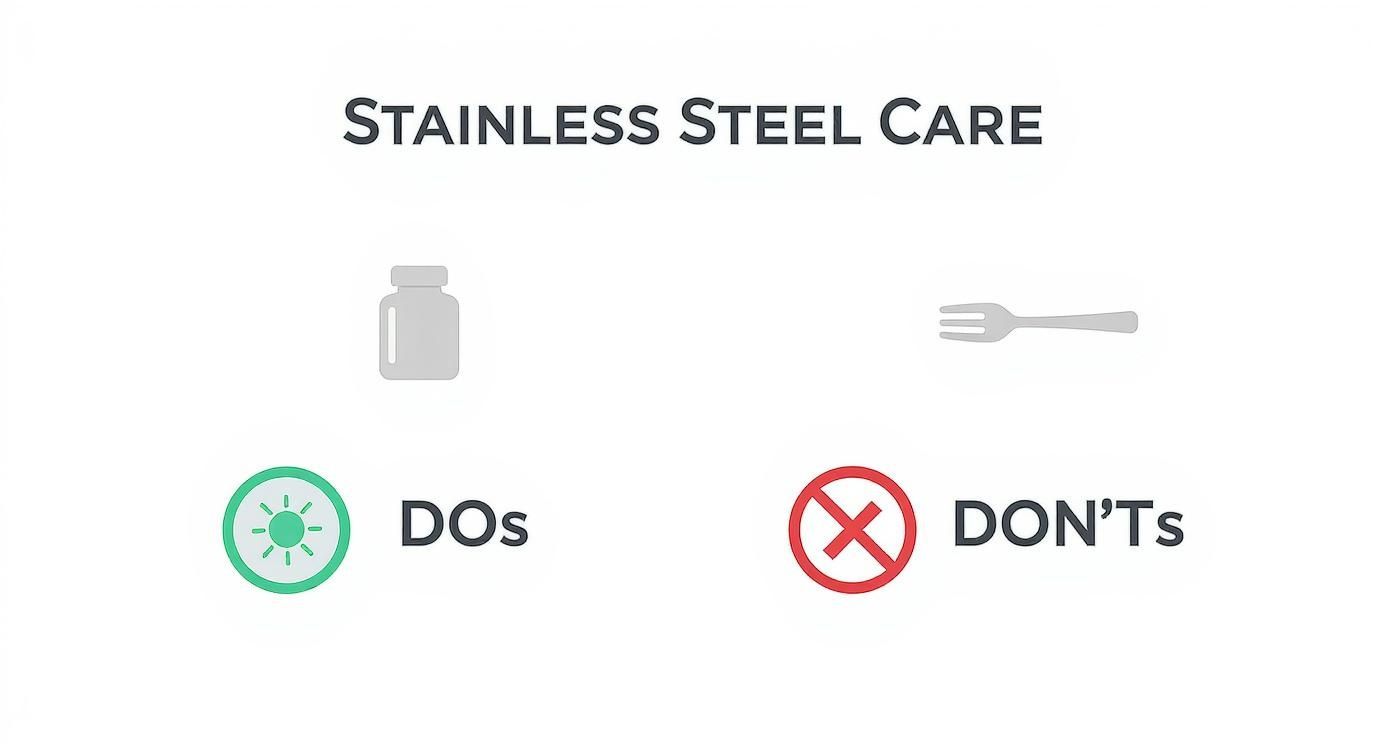
As you can see, the key is pretty straightforward: gentle cleaning and steering clear of harsh chemicals will keep that dreaded discoloration at bay.
At Wen-Kelli, we only use 316L stainless steel, and for a very good reason. We're all about creating beautiful, bold jewelry that’s genuinely made for your real life—from a sweaty gym session to a fancy night out. Choosing this premium, molybdenum-fortified grade is our promise to you that your pieces have the ultimate defense against tarnish and corrosion.
Want to know more about our passion for quality? Check out the story behind the Wen-Kelli brand. We believe knowing what you're buying empowers you to choose jewelry that’s truly built to last.
And That’s a Wrap: Keeping Your Stainless Steel Brilliant
So, let's put it all together. If there's one thing to take away from all this, it's that while stainless steel is an absolute workhorse, it’s not totally invincible. But the good news? You’re now completely equipped to keep your favorite pieces looking brand-new for the long haul.
We've pulled back the curtain on the difference between a simple surface issue (tarnish) and the real enemy (corrosion). You've got a whole arsenal of easy, effective care tips ready to go. And crucially, you know exactly why a premium grade like 316L stainless steel is the undisputed champion for jewelry you actually live in.
You're no longer just wearing jewelry; you understand it. You've got the science behind the shine and the simple steps to protect it.
Walk away from this guide feeling confident and empowered. Here at Wen-Kelli, we design our jewelry for your real, everyday life—which is why we insist on using top-tier 316L steel and stand behind it with a 100-day guarantee against tarnishing. We’re passionate about creating pieces that don't just catch the eye but also give you complete peace of mind.
Now go on, live your life and enjoy that brilliant shine. It’s built to last.
Your Top Questions About Stainless Steel, Answered!
Got a few lingering questions? Perfect! Let's tackle them head-on. This is where we get into the nitty-gritty of everyday wear, so you can feel 100% confident in your jewelry.
Can I Wear Stainless Steel Jewelry In The Shower?
You bet! This is one of the absolute best things about high-quality stainless steel like 316L. Hopping in the shower or washing your hands with your jewelry on is totally fine.
Just make it a habit to pat the pieces completely dry when you're done. This little step prevents water spots from forming and keeps that brilliant shine front and center.
Will Sweat Make My Jewelry Tarnish?
This is where the quality of the steel really shines. Your sweat contains salts and minerals, which are basically a type of chloride—the main thing that tries to break down that protective chromium layer on steel.
With lower-grade steel, you might see some dulling after a lot of sweaty workouts. But 316L stainless steel is a different beast entirely; it's got molybdenum mixed in specifically to stand up to the corrosive effects of sweat.
So, don't even think about taking your jewelry off for the gym! A quick wipe with a soft cloth afterward is all it takes to clear away any salty residue and keep it looking brand new.
Does "Waterproof" Mean It's Indestructible?
While our 316L pieces are incredibly resilient against water, "waterproof" doesn't quite mean invincible. It can handle your daily life—showers, rain, handwashing—like a champ. But there are a couple of environments you'll still want to avoid.
Think of it like this: your jewelry has a kryptonite. The two biggest things to steer clear of are chlorinated water (like in swimming pools and hot tubs) and saltwater (hello, ocean!). The high concentration of chemicals and chlorides in these can be really aggressive, potentially causing some temporary discoloration.
Want more pro tips on keeping your pieces pristine? You can always find the latest guides and style inspiration over on the Wen-Kelli blog.
How Do I Know If It’s Tarnishing Or Just Dirty?
Great question, and it's actually pretty easy to tell the difference. If your jewelry just looks a bit dull, has some smudges, or seems to have a film on it, it's almost certainly just a bit of everyday grime. A quick wash with some mild soap and warm water will bring that sparkle right back.
Real tarnish or corrosion, which you might see on lesser-quality metals, often shows up as tiny, dark spots (pitting) that you can't just wipe off. But with premium 316L steel, what looks like a problem is almost always just a simple fix.
At Wen-Kelli, we craft our jewelry for your real life. By using only top-tier 316L steel, we create pieces you can feel confident and stylish in, every single day. Shop the collection now!
Article created using Outrank
