

How to Clean Jewelry at Home for a Pro Shine
Of all the tutorials out there on how to clean your jewelry, the absolute simplest and most universal method uses just two things you definitely have in your kitchen: mild dish soap and warm water. Seriously, that's it.
This gentle soak-and-scrub technique is your safest bet and the perfect starting point for almost everything, from the rings you wear every day to that special necklace you save for occasions. It works wonders at lifting away the daily grime, oils, and lotions to bring back that brilliant sparkle you love.
Your Guide to At Home Jewelry Cleaning
Ready to restore that incredible shine without a trip to the jeweler? You've got this, and it's way easier than you think. Let's forget about harsh chemicals or complicated routines. The best, most effective methods rely on simple, safe items you already own.
Learning how to clean jewelry at home is all about matching the right technique to the right material. This guide will give you the confidence to care for your entire collection, from solid gold and silver to delicate pearls and gemstones.
You're not alone if you're feeling a bit hesitant. It's a surprisingly common challenge; a recent survey found that approximately 60% of people feel totally lost when it comes to cleaning their jewelry properly. This uncertainty often leads people to either do nothing or, even worse, use methods that can cause serious damage. You can read more about these jewelry care insights to see why so many of us feel unsure.
Choosing the Right Cleaning Method
First things first: you have to know what you're working with. Gold, silver, diamonds, and pearls all have completely different needs and react differently to cleaners. A method that makes a diamond sparkle could permanently ruin a soft, porous stone like an opal or a turquoise.
This handy little decision tree infographic helps you quickly figure out the best approach based on what your jewelry is made of.
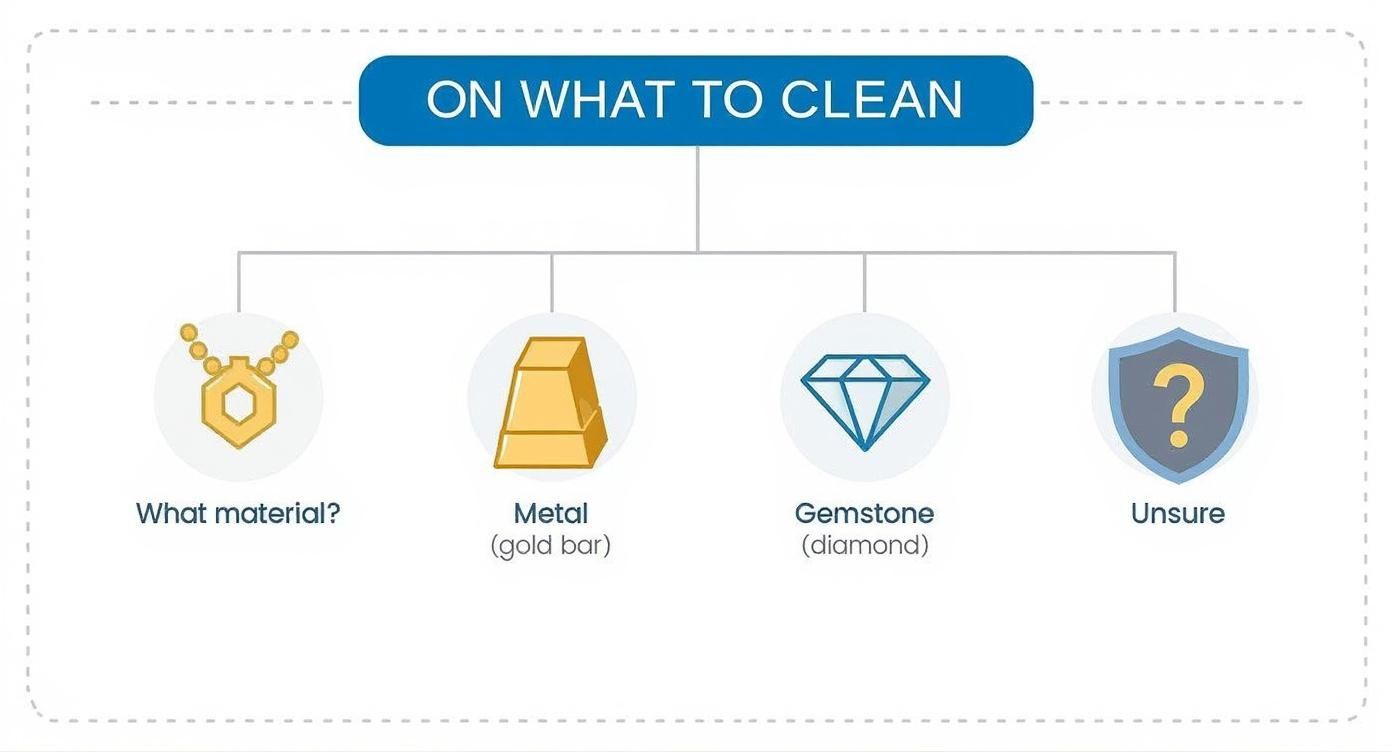
As you can see, figuring out if you're cleaning a hard metal or a delicate gemstone is the absolute most critical first step in the whole process.
To make things even easier, I've put together a quick reference table. It's your cheat sheet for matching common jewelry materials with safe, easy-to-find household cleaners and, just as importantly, what you should never, ever let near them.
Safe Household Cleaning Solutions for Your Jewelry
| Jewelry Material | Safe Household Cleaner | What to Strictly Avoid |
|---|---|---|
| Gold & Platinum | Mild dish soap, warm water, seltzer water | Bleach, chlorine, abrasive cleaners |
| Sterling Silver | Baking soda paste, specialized silver polish | Toothpaste, lemon juice, harsh chemicals |
| Diamonds & Sapphires | Dish soap, warm water, soft toothbrush | Lotions, oils, harsh scrubbing |
| Pearls & Opals | Damp soft cloth, lukewarm water | Soaking, ammonia, ultrasonic cleaners |
| Costume Jewelry | Gentle wipe with a damp cloth, baby shampoo | Submerging in water, abrasive polishes |
Keep this chart handy, and you'll always have a safe and effective way to make your favorite pieces look brand new again, right from the comfort of your own home
Cleaning Precious Metals Like Gold and Silver
Gold, silver, and platinum are the gorgeous staples of any good jewelry box. They're the classics for a reason! But while they're all stunning, each metal has its own little quirks and needs a slightly different kind of TLC to keep it looking brand new. Getting the hang of how to clean your jewelry at home really just means getting to know these personalities.
Gold and platinum are pretty easy-going, but silver... well, silver loves to tarnish. It gets that dark, cloudy look when it hangs out with the air for too long. But don't you worry! Bringing back that brilliant shine on all your favorite pieces is way easier than you think, and you probably already have everything you need.
Reviving Gold and Platinum Jewelry
Gold is a timeless beauty and surprisingly tough, but everyday life—think lotions, natural skin oils, even just dust—can leave it looking a little lackluster. The same goes for platinum, which is one of the most durable metals out there. Thankfully, the best way to clean them both is super simple and gentle.
Just grab a small bowl of warm water and add a few drops of mild dish soap. Let your gold and platinum pieces take a little bath for about 20-30 minutes. This gentle soak is amazing for loosening up all the gunk and grime that’s built up over time.
Want to take it up a notch, especially for your gold? Try swapping the warm water for some seltzer water. The bubbles in the carbonation are fantastic at breaking up stubborn dirt that gets stuck in tiny crevices and detailed engravings. It gives your jewelry that extra little sparkle!
Pro Tip: For those really detailed pieces, like an intricate filigree ring or a delicate chain, grab a new, soft-bristled baby toothbrush. It’s gentle enough that it won’t scratch the metal but perfect for getting into all those little nooks and crannies.
Tackling Tarnished Sterling Silver
I absolutely adore sterling silver, but tarnish is its sworn enemy. That darkening is just a natural chemical reaction with sulfur in the air, but the good news is you can reverse it with a fun little at-home science project.
You can skip the harsh chemical polishes that can leave tiny scratches on your beautiful silver. All you need are two things from your kitchen: baking soda and a bit of water. Mix them together to create a simple paste—you’re going for a texture like toothpaste.
Using your fingers or a soft cloth, gently rub the paste all over your silver jewelry. Make sure you get it into all the detailed spots, then give it a good rinse under cool water. You'll literally watch the tarnish vanish, revealing that bright, shiny silver you fell in love with. It’s pretty magical! While this method is a lifesaver for silver, it’s also interesting to see how other metals hold up; you can learn more about tarnish resistance in materials like stainless steel to see why different materials require such different care routines.
The Finishing Touch for All Metals
Okay, so you’ve just brought your gold necklace back to life or banished the tarnish from your favorite silver bracelet. Don't stop there! This last step is the secret to getting that perfect, professional-looking finish. After rinsing, you absolutely have to dry your jewelry completely.
Grab a soft, lint-free cloth—a microfiber cloth or a special jewelry-polishing cloth works perfectly—and gently pat each piece dry. Seriously, don't skip this part. It’s what prevents those annoying water spots from forming, which can make a freshly cleaned piece look dull all over again.
Making sure every last drop of moisture is gone is what really locks in that incredible shine. It’s the final, simple move that makes all the difference.
Caring for Gemstones, From Diamonds to Pearls
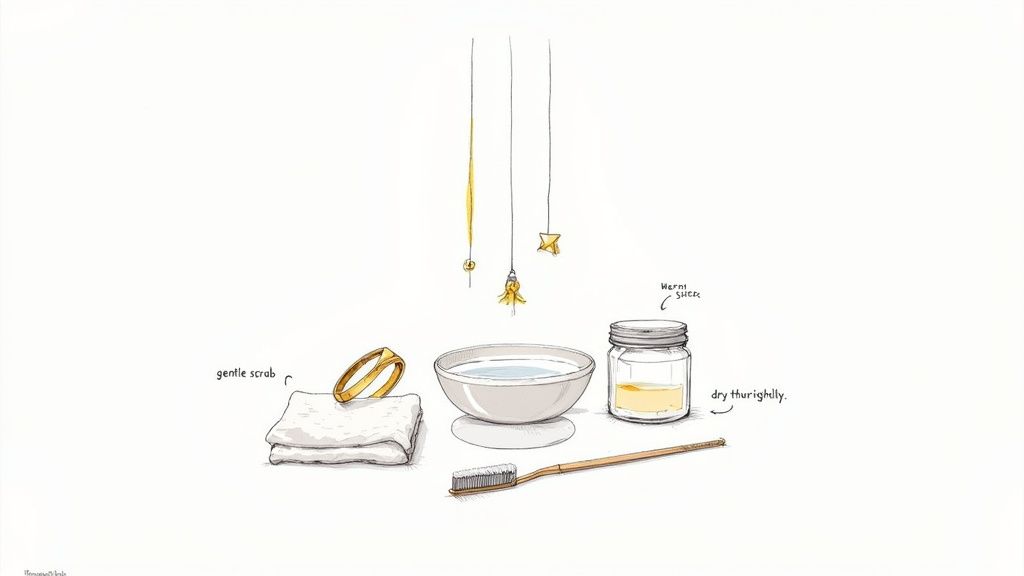
When you start learning how to clean your jewelry at home, you quickly realize that gemstones are the true divas of your collection. Every single stone has its own personality, and a cleaning method that makes a diamond dazzle could be a total disaster for a delicate opal. It really all boils down to one thing: how hard and porous the stone is.
Some gems are tough as nails, while others are soft, absorbent, and incredibly sensitive to chemicals. Thinking about them this way makes choosing the right cleaning method so much easier. Honestly, treating them all the same is one of the fastest ways to cause accidental—and often permanent—damage.
Hard Gemstones: Diamonds, Rubies, and Sapphires
Alright, let's start with the tough crowd. Stones like diamonds, rubies, and sapphires are incredibly durable, sitting high and mighty on the Mohs hardness scale. Because they're so resilient, they can handle a much more thorough cleaning without you having to worry.
Their biggest enemy isn’t getting scratched; it's the daily buildup of oils, lotions, and general grime that suffocates their brilliant fire. The solution is wonderfully simple. A good soak in a bowl of warm water with a few drops of mild dish soap works wonders to dissolve that greasy film.
Let it sit for about 20 minutes, then grab a soft-bristled toothbrush and gently scrub around the stone and its setting. This is the secret to getting into all those tiny nooks and crannies where dirt loves to hide, especially in something like an engagement ring you wear every day. Rinse it all off with warm water, and you’ll bring back that incredible, eye-catching sparkle.
The Special Case of Delicate Pearls
Pearls are in a league of their own. As organic gems created by living creatures, they are incredibly soft and porous, which makes them extremely vulnerable. Hairspray, perfume, and even the acid in your sweat can slowly eat away at their delicate surface, permanently dulling that gorgeous luster they're famous for.
The golden rule for pearls has always been "last on, first off." Put your pearls on after you've finished with all your cosmetics and sprays, and take them off the second you get home. This simple habit drastically cuts down their exposure to damaging chemicals.
Whatever you do, never submerge your pearl jewelry in water. Soaking can weaken and stretch the silk thread they’re often strung on, and it can dissolve the adhesive used in rings and earrings. The best care is simply to wipe them down with a soft, damp cloth after each wear. For a perfect example, our beautiful Perla Earrings are designed for lasting beauty when you follow this simple, gentle routine.
Soft and Porous Stones: Opals and Turquoise
Other soft stones like opals and turquoise demand the same level of caution. Opals actually have a high water content, so submerging them or exposing them to wild temperature swings can cause them to crack—a heartbreaking phenomenon known as "crazing."
For these sensitive beauties, less is always more. You’ll want to avoid any kind of soaking or harsh scrubbing. Just wipe them gently with a clean, soft, and slightly damp cloth. That’s all it takes to remove surface dust and oils without risking damage to their unique structure and vibrant color.
To make things even clearer, here’s a quick guide to help you remember the safest methods for your favorite stones.
Gemstone Cleaning Dos and Don'ts
Navigating the world of gemstone care can feel a little tricky, especially with so much conflicting advice out there. This table breaks it down simply, so you can clean with confidence and keep your precious stones looking their absolute best.
| Gemstone Type | Do This (Safe Method) | Don't Do This (Unsafe Method) |
|---|---|---|
| Hard Gems (Diamonds, Sapphires) | Soak in soapy water; scrub gently with a soft brush | Use harsh chemicals or abrasive cleaners |
| Pearls (Organic) | Wipe with a soft, damp cloth after each wear | Submerge in water, expose to chemicals, use ultrasonic cleaners |
| Soft/Porous Gems (Opals, Turquoise) | Gently wipe with a damp cloth; avoid soaking | Use any soaps or chemicals; expose to extreme temperatures |
By keeping these simple rules in mind, you're not just cleaning your jewelry—you're preserving its history and beauty for years to come. A little bit of know-how goes a long way
Common Household Cleaners to Never Use
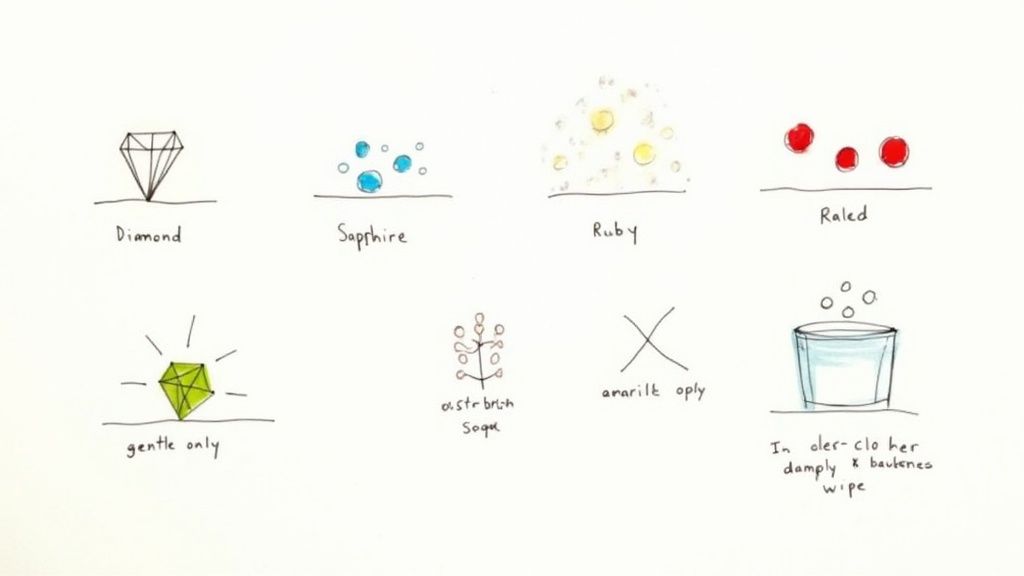
It’s awesome to know how to clean your jewelry at home, but what’s even more critical is knowing what not to use. I can’t tell you how many times I’ve seen beautiful pieces ruined by a well-meaning but misguided cleaning attempt with something pulled from under the kitchen sink.
Your home is full of powerful cleaners that are fantastic for countertops and floors, but they can be an absolute nightmare for your favorite jewelry. Think of this as your official “do not touch” list when it comes to keeping your sparkle safe. These products can strip finishes, permanently discolor metals, and even weaken the prongs holding your precious gems. A quick clean could turn into a heartbreaking, expensive repair.
The Worst Chemical Offenders
Let’s talk about the main culprits. Certain chemicals are notorious for wrecking jewelry, and they’re probably hiding in plain sight in your cupboards. Keep these far, far away from your collection. At the very top of my list are chlorine bleach and ammonia.
Chlorine, the same stuff in your pool and in many household sprays, will literally eat away at the alloys in gold jewelry, causing it to become brittle and discolored. And ammonia? While some old-school jewelers might use a heavily diluted version, it’s just too potent for DIY cleaning. It can instantly cloud delicate stones like opals, turquoise, and pearls. Don’t risk it.
Here are a few other offenders to look out for:
- Acetone: Yes, your nail polish remover. It's great for taking off last week's manicure, but it can dissolve the glues and resins used in some costume jewelry and will absolutely destroy organic gems like pearls or coral.
- Abrasive Powders: Cleansers like Comet are a huge no-no. Even something as seemingly gentle as baking soda can be too harsh if used aggressively on soft metals like gold, leaving behind a network of fine scratches that dull the shine forever.
Seemingly Harmless Items That Cause Damage
It’s not just the big, scary chemicals you have to avoid. Some everyday items that feel totally innocent can actually do a surprising amount of damage over time. One of the most common mistakes I see is people reaching for a paper towel or tissue to dry their jewelry.
Believe it or not, the tiny wood fibers in paper products act like fine-grit sandpaper on your jewelry. A quick wipe-down might seem harmless, but do it enough times, and you’ll create a web of micro-scratches that ruin that beautiful, reflective finish.
Another classic mistake is grabbing an old toothbrush. While a brand-new, baby-soft toothbrush is a fantastic tool for getting into tiny crevices, a used one with stiff or medium bristles is way too aggressive. It will scratch soft metals and can even catch on and loosen the delicate prongs holding a stone in place. Your best bet is to always, always stick to the softest materials you can find.
Crafting Your Own Simple Jewelry Care Routine
Knowing how to get your jewelry sparkling clean is one thing, but the real secret to keeping it that way? It's all about shifting from a "wait until it's dirty" mindset to a proactive one. Forget waiting for your favorite necklace to look dull and sad. The magic lies in building simple, consistent habits that prevent grime from building up in the first place.
This isn’t about setting aside hours for a massive cleaning session. It's about tiny, mindful actions that make a huge difference over time, saving you so much effort down the road.
It turns out, most of us are waiting way too long. Recent data shows that a whopping 52% of Americans only clean their jewelry when it's visibly dirty or has lost its luster. Meanwhile, only 22% are ahead of the game with a monthly routine. That's a huge gap! You can dive into more of these fascinating jewelry cleaning statistics and trends and see why a little consistency puts you in the expert category.
Finding Your Cleaning Rhythm
Let's be realistic—not every piece needs the same TLC. The trick is to match your routine to how often you wear something. Your daily go-tos are constantly battling lotions, skin oils, and everyday gunk. Your special occasion pieces? Not so much.
Here's a simple, totally doable schedule to get you started:
- The Weekly Wipe-Down: For your everyday heroes—like that ring you never take off or your favorite gold hoops—give them a quick polish with a soft, lint-free cloth at the end of the week. This tiny step takes seconds but makes a massive impact on surface buildup.
- The Monthly Refresh: Once a month, treat your frequently worn pieces to a gentle bath. This is the perfect time to break out the mild soap and warm water solution to dissolve any lingering grime and bring back that brilliant shine.
- The Seasonal Deep Clean: For the jewelry you save for special moments, a really thorough cleaning every few months is all it takes. It’s also the perfect opportunity to play detective and inspect clasps, prongs, and settings to make sure everything is still tight and secure.
The Unsung Hero: Proper Storage
You might not think about it, but how you store your jewelry is just as critical as how you clean it. I can't tell you how many times I've seen tangled chains and scratched gems from being tossed into a single drawer. That’s a recipe for disaster! Proper storage is your first line of defense.
My Two Cents: The whole point of smart storage is to keep your pieces separate, dry, and safe. A little bit of organization now prevents the kind of damage that no amount of cleaning can ever undo.
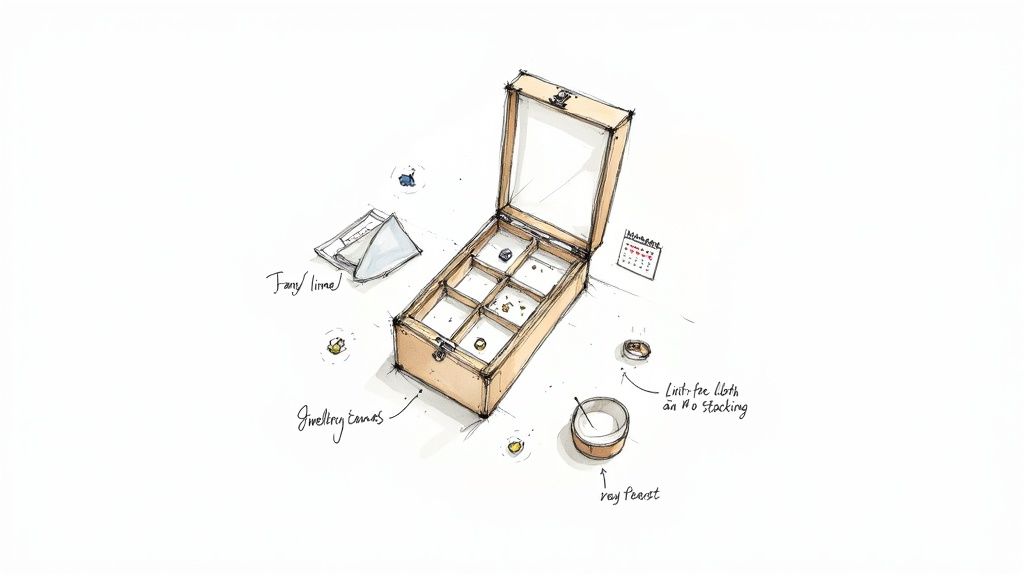
Seriously, consider investing in a jewelry box with soft, fabric-lined compartments. It’s a game-changer. This keeps your harder stones (looking at you, diamonds!) from scratching up softer metals and delicate gems like pearls. And for your silver pieces, an anti-tarnish bag or cloth is your best friend. It dramatically slows down that pesky oxidation, which means you'll be polishing way, way less. Give your jewelry a safe home, and it will reward you by looking incredible for years.
Your Top Jewelry Cleaning Questions Answered
Even with a perfect step-by-step guide, you're bound to have some questions! Learning the ropes of at-home jewelry care always brings up a few "what ifs" and "should I reallys?"
Let's dive into the most common questions I hear. My goal is to get you feeling totally confident and ready to make every single piece you own sparkle.
Can I Use Toothpaste to Clean My Jewelry?
I see this myth floating around all the time, and the answer is a hard no. It seems like it would work, right? But most toothpaste is made with mild abrasives designed for tough tooth enamel.
Those same polishing agents are way too rough for softer metals like gold and silver. Using toothpaste can leave behind a web of microscopic scratches, which over time will make your favorite pieces look dull and lifeless. A much safer (and more effective!) bet is always gentle dish soap and a super-soft brush.
How Often Should I Clean My Engagement Ring?
For a ring you wear daily, a little consistency goes a long way. I always recommend a light cleaning once a week to keep it looking as brilliant as the day you got it.
Think about it: your ring is constantly exposed to hand lotions, soaps, hairspray, and your skin's natural oils. That stuff builds up into a cloudy film really fast!
A quick 20-minute soak in some warm water with a couple of drops of dish soap, followed by a gentle scrub, is all it needs to cut through the grime. Making this a weekly habit will ensure your diamond never stops catching the light. And hey, if a good cleaning makes you wonder about the fit, you can always check out this handy guide on how to measure your ring size at home.
Expert Insight: I love ultrasonic cleaners, but they are only for your toughest pieces—think solid gold, platinum, and diamonds. Their intense vibrations can be a disaster for more delicate jewelry.
Never, ever put organic gems like pearls, coral, or amber in an ultrasonic cleaner. The same rule applies to porous stones like turquoise and opals, as the vibrations can actually cause them to crack. It's also a major risk for jewelry with lots of small pavé stones or treated gems (like fracture-filled emeralds), as the machine can easily loosen settings or damage the stone itself. When in doubt, just wash it by hand!
Ready to wear stunning jewelry you never have to take off? The Wen-Kelli collection is designed for your real life—water-proof, sweat-proof, and guaranteed not to tarnish. Explore our everyday essentials now!
