

Clean Jewelry With Vinegar The Right Way
Yes, you absolutely can clean jewelry with vinegar! I've been using this trick for years. It's an incredible, eco-friendly way to dissolve tarnish and bring that brilliant sparkle back to the right pieces, especially solid gold and sterling silver.
The secret is simply knowing which materials can handle its acidic touch and which can't.
What To Know Before You Clean Jewelry With Vinegar
Before you dunk your favorite necklace, let's talk about why vinegar works. It contains acetic acid, a powerhouse for breaking down the gunk and oxides that make your jewelry look dull. But that same acidic strength can be a real problem for more delicate, porous materials.
Think of it this way: solid gold and sterling silver are tough. They can take a gentle vinegar bath and come out looking fantastic. Hard, non-porous gemstones like diamonds or sapphires can also usually handle a quick clean without any trouble.
But for other materials? It's a different story.
This quick visual guide really helps clarify what's safe and what's a definite no-go.
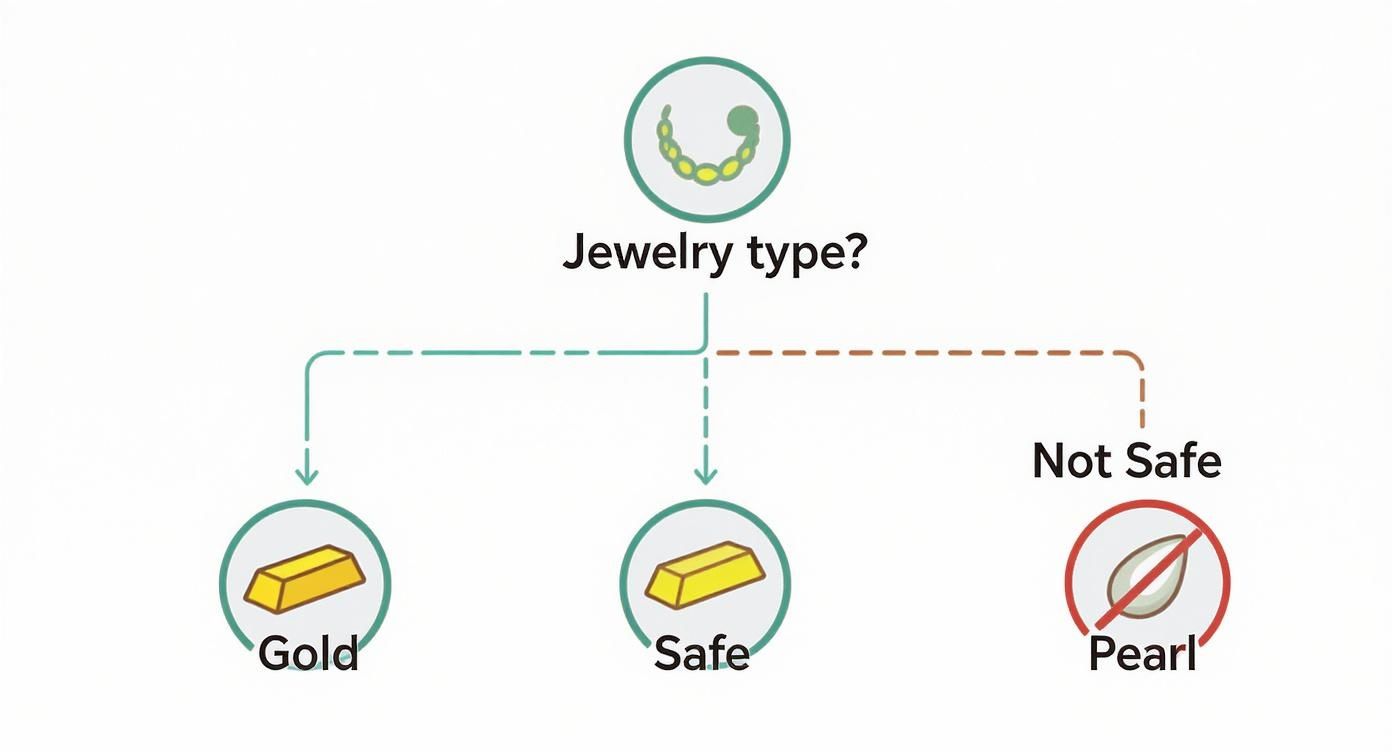
As you can see, the first and most important step is just figuring out what your jewelry is made of. Getting that right prevents a world of hurt.
The Science Behind The Shine
The method itself couldn't be simpler, which is why it's been a trusted trick for so long. For decades, people have relied on distilled white vinegar to clean precious metals. The most common technique, popular everywhere from the US to Europe, involves diluting it with warm water and letting silver soak for about 20 minutes to bring back its original shine. You can find some more great insights into this classic cleaning method on Minimalynn.com.
Here's a quick cheat sheet to help you decide what to clean.
Vinegar Cleaning Safety At A Glance
This table breaks down which materials are friends with vinegar and which are... not. It's a handy reference to keep in mind!
| Material Type | Safe With Vinegar? | Key Precaution |
|---|---|---|
| Solid Gold | Yes | Totally safe. Go for it! |
| Sterling Silver | Yes | Great for removing tarnish. |
| Diamonds | Yes | Safe for a quick dip and clean. |
| Sapphires & Rubies | Yes | These hard gems can handle it. |
| Plated Jewelry | No | Vinegar will strip the plating right off! |
| Pearls | No | The acid will dissolve their delicate surface. |
| Opals | No | Too porous and soft; will be damaged. |
| Turquoise | No | Also porous and will absorb the acid. |
Just remember this guide, and you'll keep your treasures safe while getting them sparkling clean.
The Golden Rule of Vinegar Cleaning
If there's one thing to take away from all this, it's my personal motto for jewelry care: when in doubt, don't.
Never, ever use vinegar on pearls, opals, turquoise, or any plated jewelry. The acid can permanently ruin soft, porous gemstones and will strip the thin metal layer right off plated pieces. Trust me, it's a mistake you can't undo!
By sticking to the safe list, you can confidently use this simple, at-home method to restore your jewelry's brilliance without any risk. Happy cleaning
Your Simple Method For A Dazzling Clean
Alright, let's get your jewelry sparkling again! This is the fun part where we gently bring back that brilliant shine, and trust me, it’s way easier than you think. Think of this as a gentle spa day for your pieces, not a harsh scrub-down.
First things first, you'll need to gather a few simple supplies. No fancy equipment is required here—just a couple of common household items will do the trick.
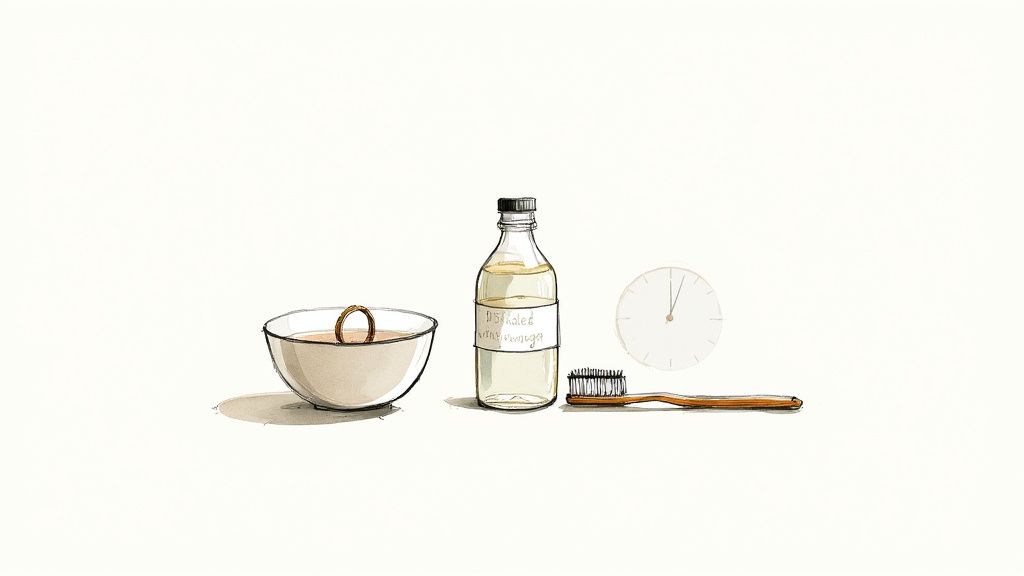
Prepping The Perfect Soak
Let's whip up the cleaning solution. In a small bowl, you're going to combine equal parts distilled white vinegar and warm water. This 50/50 ratio is really the sweet spot; it's just acidic enough to break down grime and tarnish but diluted enough to be perfectly safe for your solid gold or sterling silver. Give it a quick stir to mix it up.
Next, gently place your jewelry into the solution. You want to make sure the pieces are fully submerged without piling on top of each other. Now, set a timer for 15 to 20 minutes and let them soak.
I know it's tempting to think "longer is better," but resisting the urge to soak your jewelry for hours is key. Extended exposure to even diluted acid can start to affect the metal's finish. Sticking to this short timeframe is crucial for a safe and effective clean.
The Gentle Scrub-And-Rinse
Once your timer dings, carefully take your jewelry out of the vinegar bath. This is where a soft-bristled toothbrush becomes your best friend. Gently scrub each piece, paying extra attention to those intricate details, prongs, and tiny crevices where dirt just loves to hide. Remember to use light, circular motions—the goal is to dislodge buildup, not to scratch the metal.
Now for the most important step: the rinse. Hold your jewelry under warm, running water and rinse it completely. You need to wash away every last trace of vinegar to halt the acidic action. Any residue left behind can continue to eat away at the metal over time.
Finally, lay your gleaming pieces on a soft, lint-free cloth and gently pat them dry. To finish, let them air dry completely to avoid any pesky water spots. And that’s it! A beautiful, dazzling shine really is that simple.
While vinegar is fantastic for the right materials, it's just one of many options. For other safe techniques, you can explore our comprehensive guide on how to clean jewelry at home.
So, What Can You Actually Clean With Vinegar?
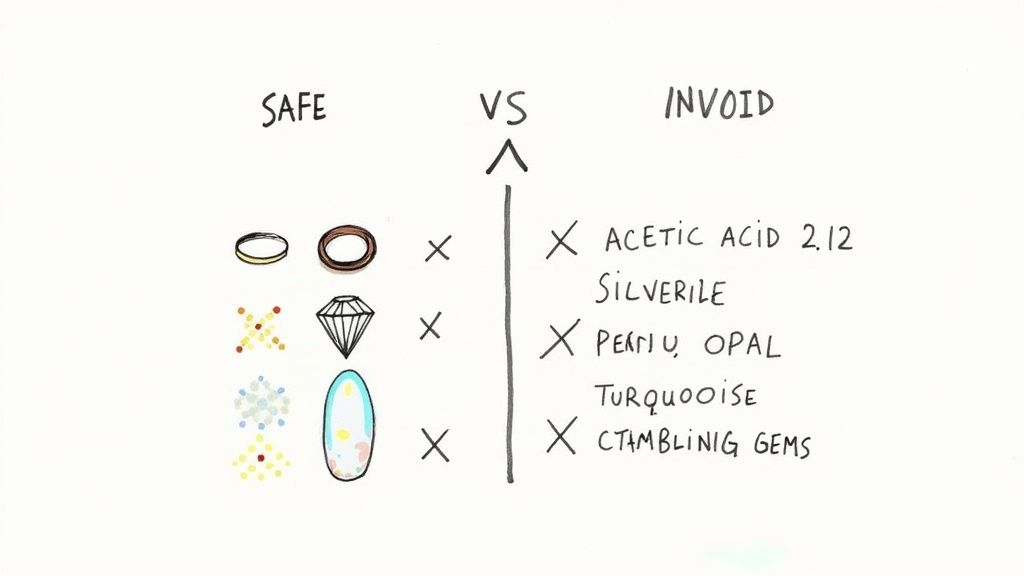
Before you start dipping your favorite pieces, let’s talk about what’s safe. Knowing your materials is the absolute key to getting that brilliant shine without accidentally causing damage.
When you clean jewelry with vinegar, you’re harnessing the power of acetic acid. This stuff is a natural wonder, dissolving the gunk, grime, and oxides that make metals look dull and tarnished. It’s a beautifully simple chemical reaction that works wonders on the right kind of jewelry.
That's why solid, un-plated metals are such perfect candidates for this method. The acid gets to work directly on the tarnish without any risk of stripping away a delicate top layer.
Metals That Love a Vinegar Bath
Solid precious metals are your best friends here. Their tough, non-porous nature means they can easily stand up to the mild acidity of a vinegar solution.
- Sterling Silver: This is the classic example! Vinegar is absolutely fantastic for melting away that dark sulfide layer that inevitably creeps up on silver.
- Solid Gold (Yellow, Rose, & White): Real gold and its solid alloys are incredibly resistant to corrosion, making them ideal for a quick vinegar dip.
- Platinum: As one of the toughest and least reactive metals in the jewelry world, platinum handles a vinegar clean without breaking a sweat.
Of course, some modern metals are engineered to be low-maintenance from the start. If you're curious about how different materials resist daily wear, you can dive deeper into whether stainless steel tarnishes in our other guide.
Gemstones That Can Take the Plunge
Just like with metals, the secret to gemstone safety is all about durability. You're looking for hard, non-porous stones that won't absorb any liquid or have a negative reaction to the acid.
Pro Tip: Your safest bets are the heavy hitters on the Mohs scale of hardness. Think diamonds, sapphires, and rubies. These gems are famously tough and can easily handle a gentle vinegar clean, emerging with all their sparkle intact.
These powerhouse stones won’t get etched or clouded by a diluted vinegar solution, so you can confidently clean them right along with their solid metal settings.
Jewelry You Should Never Clean With Vinegar
Okay, let's talk about the important stuff. While vinegar is a fantastic trick for tough, solid metals, this is the part of the guide that could save your most cherished pieces from a heartbreaking, irreversible mistake.
The very thing that makes vinegar a great cleaner—its acetic acid—is also what makes it a huge threat to delicate materials. You absolutely cannot clean jewelry with vinegar if it falls into a few key categories. Seriously, don't do it.
Think of soft, porous gemstones as tiny, beautiful sponges. When you dunk them in acid, they don't just get a surface clean. They soak it right up, leading to permanent damage, weird discoloration, and a dull, lifeless finish. It's a risk that is never, ever worth taking.
The Definitive 'Do Not Clean' List
To keep your collection sparkling and safe, here are the specific materials that should never, ever see a drop of vinegar. Memorize this list—it’s that important!
- Pearls: These gorgeous organic gems are incredibly soft, ranking as low as 2.5 on the Mohs hardness scale. The acid in vinegar will literally dissolve their delicate outer layer, completely destroying that beautiful luster forever.
- Opals and Turquoise: Both of these stones are super porous. They'll drink up the vinegar, which can cause them to discolor, become brittle, or even crack down the road.
- Soft Stones: Other delicate beauties like coral, amber, and malachite are also far too fragile for any kind of acidic cleaner.
My rule of thumb is simple: If a gemstone feels soft to the touch or looks opaque rather than crystal-clear, keep it far, far away from vinegar. The potential for permanent damage is just too high.
A Serious Warning For Plated Jewelry
Beyond gemstones, there's another major category to watch out for: anything with plating. This goes for gold-plated, vermeil, rhodium-plated, and even tarnish-resistant pieces from brands like our own Wen-Kelli collection.
These pieces are crafted with a thin, delicate layer of precious metal over a more durable base. Vinegar is aggressive enough to strip that plating right off, exposing the metal underneath and completely ruining the look. This isn't a gentle clean; it's chemical stripping, and the damage is immediate and can't be undone. For these items, always stick to a simple soap-and-water solution.
Aftercare Tips For A Lasting Shine
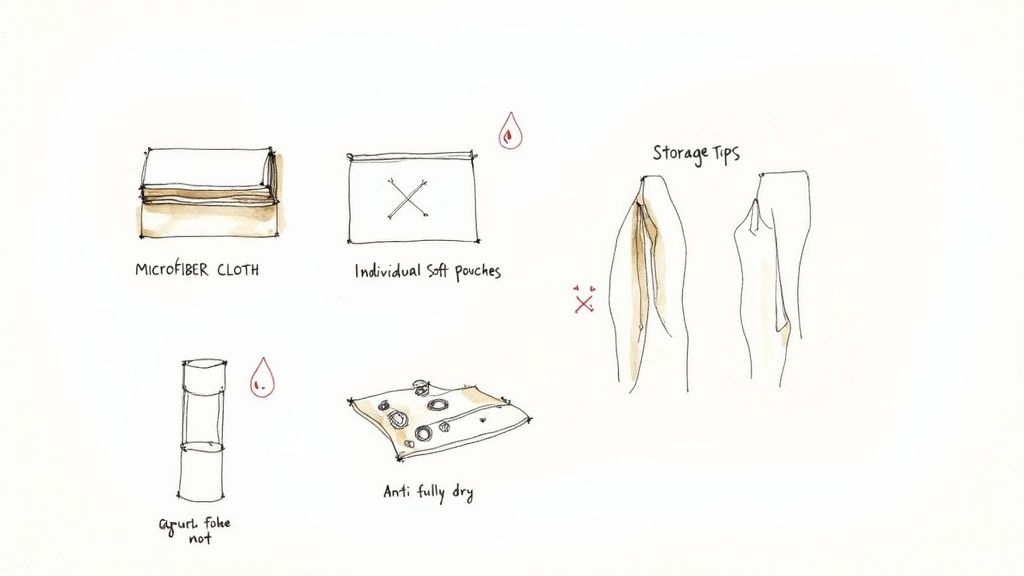
Giving your jewelry a great clean is an amazing feeling, but keeping that incredible sparkle is the real win! Now that you’ve mastered how to clean jewelry with vinegar, let's talk about locking in that luster with a few simple habits. Trust me, these small steps make a huge difference in warding off future tarnish and damage.
First things first: after any cleaning, you need to make sure every single piece is completely bone-dry before you put it away. I can't stress this enough! Lingering moisture is tarnish’s absolute best friend, creating the perfect environment for that dull, discolored look to creep back in.
My golden rule for daily wear is "last on, first off." Jewelry should always be the final touch after your lotions, perfumes, and hairsprays have fully dried. It should also be the first thing you take off at night. This one simple habit dramatically cuts down on chemical exposure.
Smart Storage For Lasting Brilliance
How you store your jewelry is just as important as how you clean it. Tossing everything into one big box is a recipe for disaster—think scratches, tangled chains, and accelerated tarnishing.
Instead, the goal is to give each piece its own little home.
- Individual Pouches: Soft fabric pouches are your best friends here. They're perfect for preventing delicate chains from becoming a knotted mess and stop harder gemstones from scratching up softer metals.
- Anti-Tarnish Cloths: Lining your jewelry box with these specialized cloths is a game-changer. They actively absorb the airborne pollutants that cause silver and other metals to dull over time.
Proper storage is honestly the secret weapon for maintaining that just-cleaned glow. For more tips on keeping your pieces looking brand new, check out our guide to choosing tarnish-free jewelry that’s built to last from the start.
Got Questions About Cleaning Jewelry With Vinegar?
Let's tackle some of the most frequent questions that pop up when you're thinking about using vinegar to get your jewelry sparkling again. Getting these sorted will help you clean like a pro and achieve that brilliant shine you're after!
Can I Just Use Apple Cider Vinegar?
I get this one a lot. While it's tempting to grab whatever you have in the cupboard, you'll want to stick with distilled white vinegar for this job. It’s a game-changer because it’s totally colorless and has a consistent, predictable acidity.
Apple cider vinegar, on the other hand, has a brownish hue that can potentially stain porous gemstones or get trapped in detailed metalwork. It also often contains natural sediment that might leave a cloudy film behind, which kind of defeats the purpose, right? For a truly flawless finish, clear white vinegar is your best bet every time.
So, How Often Can I Actually Do This?
Vinegar is pretty potent stuff, so think of this as a special treatment for a deep clean, not your go-to weekly polish. It’s perfect for when you need to bust through some serious tarnish or buildup, but I wouldn't do it more than once every couple of months.
Even on sturdy metals like sterling silver, using an acidic cleaner too often can eventually wear down the finish. For your day-to-day care, a quick wipe with a soft, dry cloth is usually all you need to keep things looking great.
Pro Tip: If your piece looks a little cloudy after cleaning, don't worry! This is usually just a bit of residue from the cleaning solution or mineral deposits from your tap water. All you have to do is give it a final rinse in some distilled water and buff it dry with a fresh, soft cloth to bring back that amazing sparkle.
Tired of worrying about tarnish in the first place? Check out the gorgeous water-proof and sweat-proof collection at Wen-Kelli, where every piece is made to keep up with your real life. Find your next everyday favorite at https://www.wen-kelli.com.
