

The Best Jewelry for Sensitive Skin Ultimate Guide
If you have sensitive skin, you already know the best jewelry is made from high-quality, nickel-free metals. Your safest bets are materials like titanium, niobium, platinum, and high-karat gold (14k or higher). These are famous for being incredibly gentle and non-reactive. For a durable and affordable choice, surgical-grade stainless steel is another fantastic option that works for most people.
Your Search for Skin-Friendly Jewelry Ends Here

Let's be real—finding beautiful jewelry that doesn't leave your skin red, itchy, and irritated can feel like an impossible quest. That frustrating hunt for stylish pieces that won’t betray you with an allergic reaction is a challenge so many of us know firsthand. This guide is here to change all that.
We're diving deep into why certain metals cause those nasty reactions and introducing you to a world of genuinely hypoallergenic options. No more choosing between style and comfort! We passionately believe everyone deserves to wear stunning accessories without a single worry.
Empowering Your Jewelry Choices
You are definitely not alone in this struggle. The demand for hypoallergenic jewelry has exploded as more people become aware of skin sensitivities. In fact, industry reports show that nearly 17% of women and 3% of men worldwide suffer from jewelry allergies, often triggered by that common culprit, nickel. You can read more about the rise of skin-friendly jewelry choices to see just how big this is.
Consider this guide your new playbook for building a jewelry collection you can finally trust. We’ll arm you with the knowledge to shop confidently, spot safe materials, and enjoy accessorizing again without the constant fear of a breakout. This is your first step toward a lifetime of happy skin and fabulous style.
Forget the guesswork and disappointment. Real confidence comes from knowing exactly what you're putting on your skin and trusting its quality.
Introducing Your Ultimate Solution
At Wen-Kelli, we get this journey because we've lived it ourselves. It's the whole reason we built our brand—to solve this exact problem. Our commitment goes way beyond just looking good; it's about feeling good, too.
We are laser-focused on creating pieces that are not only gorgeous but also engineered for your real life. Here’s what makes our jewelry different and the best choice you can make for your sensitive skin:
- Water-Proof and Sweat-Proof: Our jewelry is built to keep up with your daily life, from a sweaty gym session to a relaxing shower, without breaking down. This is so important because moisture can actually speed up the corrosion of cheap metals, releasing irritants directly onto your skin.
- Tarnish-Resistant: Tarnishing isn't just about looks. When a piece tarnishes, it often means its protective outer layer has worn off, exposing your skin to the potentially irritating base metals hidden underneath. We're so confident in our quality that we offer a 100-day guarantee against tarnishing, meaning your skin stays protected.
- Premium, Skin-Safe Materials: We start with the good stuff. We prioritize high-quality, hypoallergenic materials to ensure our jewelry is as kind to your skin as it is beautiful.
This guide will walk you through everything you need to know, from the science behind metal allergies to a ranking of the safest materials out there. Your days of compromising on jewelry are officially over. Welcome to a world of worry-free sparkle
Understanding Why Your Skin Reacts to Jewelry
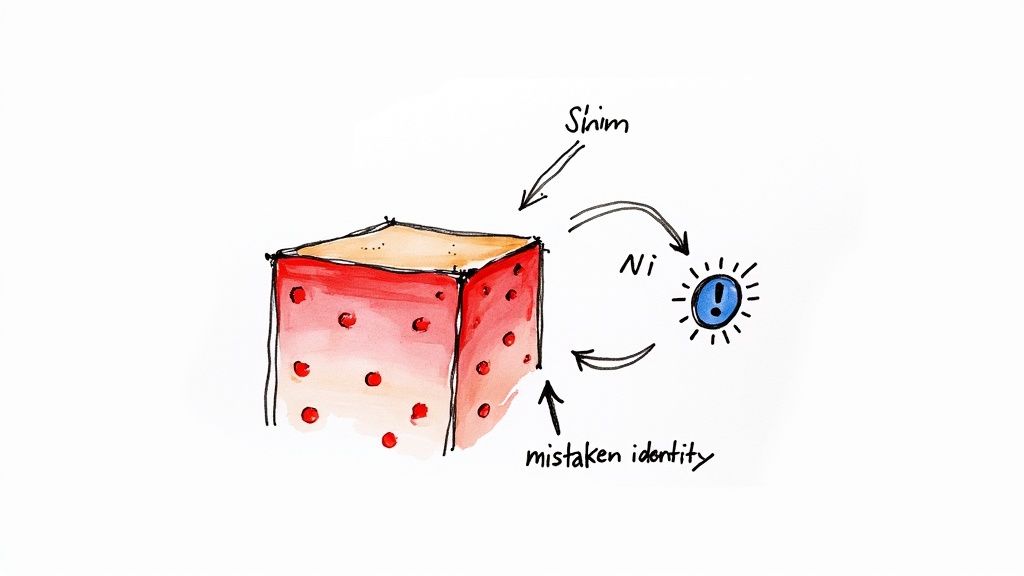
Have you ever wondered what’s really going on when a gorgeous new necklace leaves you with an angry, itchy rash? It’s not just a run of bad luck. It's actually a fascinating biological process—a case of mistaken identity happening right on your skin.
Think of your immune system as your body's personal security team, always on patrol for real threats like bacteria and viruses. When you wear certain kinds of jewelry, tiny, invisible metal ions can break free from the piece, especially when they mix with your sweat. Sometimes, your immune system mistakes these totally harmless metal particles for dangerous invaders and sounds the alarm, launching a full-scale defensive attack.
That over-the-top response is exactly what you see and feel as an allergic reaction. The result is allergic contact dermatitis, which is just the scientific way of saying you’ve got that frustrating redness, itching, swelling, or even blistering right where the jewelry was sitting. It’s your body trying to protect you from something it wrongly sees as a threat.
Meet The Usual Suspects
While lots of metals can cause a reaction, there are a few notorious culprits that are known for triggering this immune system mix-up. They show up constantly in fast-fashion and costume jewelry because they're cheap, strong, and easy for manufacturers to work with. Getting to know these troublemakers is the first step toward finding jewelry your sensitive skin will love.
Here’s a quick lineup of the most common offenders:
- Nickel: This one is the undisputed king of jewelry allergens. It’s strong, has a bright finish, and is super affordable, making it a go-to for creating alloys. Unfortunately, for up to 17% of women and 3% of men, it’s also the metal most likely to cause a major skin freak-out.
- Cobalt: Often found hanging out with nickel in alloys, cobalt can also trigger dermatitis. It's used to create a tough, silvery-white finish but can be a hidden irritant for those with extreme sensitivities.
- Chromium: Another frequent player in metal alloys, chromium is sometimes used in plating to give jewelry a shiny, corrosion-resistant surface. Just like nickel and cobalt, it can be a source of serious skin irritation for some people.
And remember, a reaction isn't just about a red mark. Sometimes a piece of jewelry will leave behind a weird stain. If you've ever seen a green or black smudge on your skin, you've witnessed a chemical reaction in action. You can dive deeper into why jewelry turns skin green in our detailed article on that very topic.
Recognizing The Signs of a Reaction
Symptoms of a metal allergy can range from just mildly annoying to seriously uncomfortable. The good news? They almost always appear exactly where the metal touched your skin, which makes it pretty easy to pinpoint the source of the problem.
Key Takeaway: A jewelry allergy isn't a flaw in your skin; it's a sign that your immune system is working overtime! The solution isn't to give up on jewelry—it's to choose smarter, safer materials that your body recognizes as friends, not foes.
Knowing what to look for helps you figure out your own sensitivity level and stop a reaction before it gets out of hand.
To help you spot the problem, here's a quick reference guide to the most common metal culprits and the trouble they can cause.
Common Allergy-Causing Metals and Their Effects
| Metal Culprit | Commonly Found In | Potential Skin Reaction |
|---|---|---|
| Nickel | Costume jewelry, clasps, earring posts, belt buckles | Itching, red rash, bumps, and even blistering in severe cases. |
| Cobalt | Blue pigments, metal alloys, buttons, and snaps | Persistent dry, itchy, and scaly patches of skin that can be tough to heal. |
| Copper | Rose gold alloys, brass, bronze, some sterling silver | Green or black skin discoloration and sometimes mild itching. |
By understanding this "mistaken identity" process and knowing who the main offenders are, you're already on your way to making amazing choices for your skin. The goal is to find beautiful pieces made from materials that fly right under your immune system's radar, letting you accessorize with total confidence and comfort.
The Best Hypoallergenic Jewelry Metals Ranked
Ready to meet your new best friends in the jewelry world? Let’s be real—when you have sensitive skin, knowing which metals are on your team is everything. Think of this as your ultimate power ranking, starting with the absolute safest, most reliable options and working our way through other fantastic choices. This isn't just a list; it's your new roadmap to building a gorgeous, irritation-free jewelry collection you'll love to wear.
We're kicking things off with the undisputed heavyweights of hypoallergenic style. These are the materials so incredibly safe and non-reactive that they're trusted by doctors for body implants. And hey, if they're safe enough to go inside your body, you can feel beyond confident wearing them on your skin.
Tier One: The Medical-Grade Champions
Right at the top of our list, we have metals celebrated for their amazing biocompatibility. That’s just a fancy way of saying your body’s immune system pretty much ignores them, letting them coexist peacefully with your skin without triggering that dreaded "mistaken identity" reaction we all want to avoid.
Titanium: If hypoallergenic metals had a hall of fame, titanium would be a first-ballot inductee. It is 100% nickel-free, unbelievably strong, and so lightweight you'll barely feel it. There's a reason it's the top choice for initial body piercings—it’s one of the safest metals you can possibly put on (or in) your body. Its popularity has exploded as more people discover its benefits. In fact, titanium has become one of the most sought-after metals for sensitive-skin jewelry, with sales growing steadily year after year.
Niobium: Here's a lesser-known but equally awesome hero in the metal world. Just like titanium, niobium is an elemental metal—not an alloy—so it contains zero nickel. It’s highly resistant to corrosion and is even used in medical devices like pacemakers. The coolest part? Niobium can be anodized to create a stunning rainbow of vibrant, permanent colors without any plating, making it a super fun and exceptionally safe choice.
Platinum: The very definition of luxury and safety. Platinum is a naturally white, dense, and incredibly durable precious metal that is inherently hypoallergenic. It almost never causes skin reactions. Its purity and refusal to tarnish make it the perfect, albeit pricier, choice for wedding bands and fine jewelry meant to last a lifetime.
Tier Two: The Reliable Precious Metals
Next up are the precious metals that have been trusted for centuries for their beauty and relative safety. The secret here is understanding purity levels, because what the gold or silver is mixed with makes all the difference.
High-Karat Gold (14k and above): Pure gold itself is extremely non-reactive. The problems start when it’s mixed with other metals (alloys) to make it stronger and more durable for jewelry.
- 24k Gold is pure gold and completely hypoallergenic, but it's way too soft for most everyday pieces.
- 18k and 14k Gold hit that sweet spot. They contain a high percentage of pure gold while being strong enough for daily wear. Just be sure to look for nickel-free alloys, especially when choosing white or rose gold.
Pro Tip: The lower the karat number (like 10k gold), the more other metals are in the mix, which seriously ups the risk of a reaction. Stick to 14k or higher for the best and safest results.
Sterling Silver (Nickel-Free): Just like gold, pure silver is too soft for jewelry on its own. It's usually mixed with copper to create sterling silver, which is 92.5% pure silver. Most people aren't sensitive to silver or copper, but some sterling silver can contain trace amounts of nickel. To be safe, always hunt for pieces labeled "nickel-free" or stamped "925" sterling silver.
Tier Three: The Smart and Sturdy Option
This category features a fantastic, accessible, and incredibly durable material that works wonderfully for most people—as long as you choose the right grade.
Surgical-Grade Stainless Steel: Don't let the "steel" part scare you; this isn't what your car is made of. Surgical stainless steel (look for grades like 316L and 316LVM) is specifically engineered to be biocompatible. While it does contain some nickel, it has an extremely low nickel-release rate. This means the nickel is so tightly bonded within the metal that it’s highly unlikely to ever escape and irritate your skin. It’s an affordable, durable, and tarnish-resistant choice that’s perfect for active lifestyles.
Speaking of which, if you lead an active life, check out our guide to the best sweat-proof jewelry to find amazing pieces that can keep up with you.
To make this even easier, here's a quick cheat sheet to compare these amazing metals at a glance.
Hypoallergenic Metals Comparison Guide
| Metal Type | Hypoallergenic Rating (1-5) | Best For | Average Cost | Durability |
|---|---|---|---|---|
| Titanium | 5/5 (Highest) | New Piercings, Extreme Sensitivities, Everyday Wear | Mid-Range | Extremely High |
| Niobium | 5/5 (Highest) | Extreme Sensitivities, Colorful Jewelry | Mid-Range | High |
| Platinum | 5/5 (Highest) | Fine Jewelry, Wedding Bands, Lifetime Wear | Very High | Extremely High |
| 14k-18k Gold | 4/5 (Very High) | Fine Jewelry, Everyday Pieces | High | Moderate-High |
| Sterling Silver | 3/5 (Good) | Fashion Jewelry, Occasional Wear | Low-Mid | Moderate |
| Stainless Steel | 3/5 (Good) | Everyday Wear, Active Lifestyles, Budget-Friendly | Low | Very High |
This table should give you a fantastic starting point for finding the perfect material that fits your skin's needs, your style, and your budget.
Now that you're armed with this ranking, you can shop with a whole new level of confidence, knowing exactly which metals are your skin's best allies. Happy jewelry hunting
A Guide to Gold-Filled, Plated, and Sterling Silver Jewelry
Let’s face it, diving into the world of affordable jewelry can feel like walking through a minefield when you have sensitive skin. You see all these gorgeous gold-filled, plated, and sterling silver pieces, but that nagging question pops up: "Is this going to make me break out?"
It’s time to take the guesswork out of the equation. We’re going to break down exactly what these terms mean so you can shop with total confidence and finally rock those styles you've been eyeing.
Understanding the Layers: Not All Gold is Created Equal
When you see terms like "gold-plated" or "gold-filled," it's easy to assume they're basically the same. They're not. The difference is massive, especially when it comes to keeping your skin happy.
Think of it like painting a wall. You can do a quick, cheap coat that will start flaking in a few months, or you can invest in multiple, high-quality layers that will look amazing for years.
-
Gold-Plated: This is the thinnest, quickest coat of paint. A base metal (often brass or copper) gets a microscopic flash of gold electroplated onto its surface. We're talking seriously thin—the gold often makes up less than 0.5% of the item's weight. That thin layer can wear off in a flash from sweat, friction, or even lotion, exposing your skin to the mystery metal underneath. Hello, potential rash.
-
Gold Vermeil: This is a step up, like a couple of solid coats of premium paint. For a piece to be legally called "vermeil," it has to have a sterling silver core and be coated in a layer of gold that's at least 2.5 microns thick. It’s a much better option than standard plating, but that gold layer can still wear down over time, eventually exposing the silver.
-
Gold-Filled: Now this is the gold standard (pun intended!). Gold-filled isn't plating at all; it’s a thick, durable layer of solid gold that's been permanently heat-bonded to a high-quality jeweler's brass core. By law, the gold must account for at least 5% of the item's total weight. That's a whopping 100 times more gold than what's on a typical gold-plated piece! This substantial layer won't flake or rub off, meaning the reactive base metal never even gets a chance to touch your skin.
For anyone with sensitive skin, high-quality gold-filled jewelry is an absolute game-changer. You get the look, feel, and durability of solid gold at a much more accessible price point, all while keeping your skin safe with a thick, protective barrier.
The Sterling Silver Situation
So, what about sterling silver? It's a timeless classic, right? Absolutely! True sterling silver is stamped with "925," which signifies that it's 92.5% pure silver. The other 7.5% is an alloy added for strength and durability.
Usually, that alloy is copper, which is perfectly fine for most people. The trouble starts when some manufacturers sneak nickel into that 7.5% mix to cut costs. Suddenly, that "safe" sterling silver you bought is causing an itchy, red rash. The secret is to always look for jewelry specifically labeled as nickel-free sterling silver.
The Superhero Shield: Protective Coatings
Sometimes, a piece you love might have a base metal that you're not so sure about. This is where protective coatings like rhodium plating come to the rescue. Rhodium is a stunning, silvery-white precious metal from the platinum family. It’s incredibly tough and doesn't tarnish.
When plated over other metals, rhodium acts like a superhero's shield. It creates a beautiful, hypoallergenic barrier between the base metal and your skin, preventing any potential allergens from causing trouble. This is why you'll often see it used on white gold and sterling silver to boost both shine and safety. You can learn more about how protective metals work wonders for sensitive skin on JewelryBubble.com.
This chart gives you a fantastic visual of the safest metals out there, with pure and noble metals sitting right at the top.
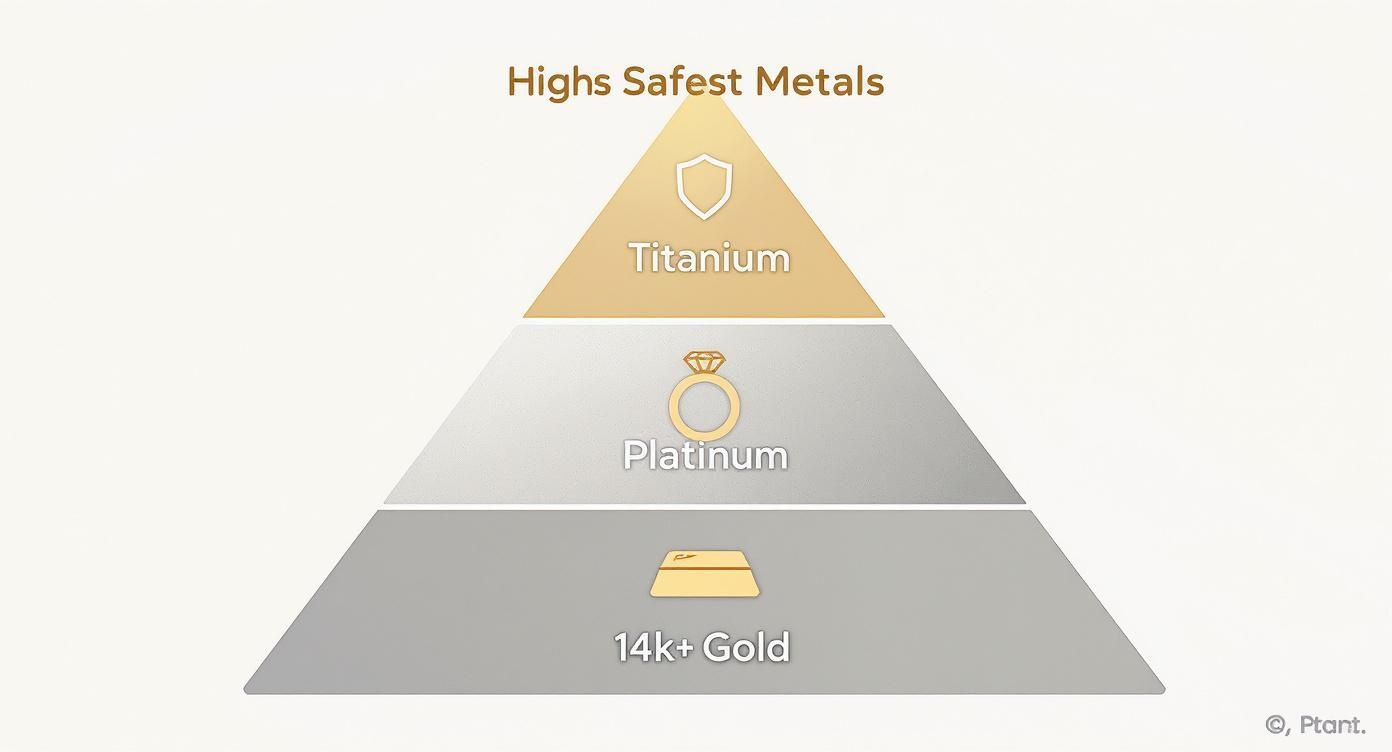
As the pyramid makes clear, sticking with pure metals like titanium or high-quality precious metals like platinum and 14k+ gold is your surest bet for keeping skin reactions at bay.
Smart Shopping and Care Tips for Your Jewelry
Alright, now that you're armed with all this amazing knowledge about skin-safe metals, it's time for the fun part: shopping! Picking out the best jewelry for sensitive skin should be an absolute joy, not a source of anxiety. With just a few simple strategies, you can confidently build a collection of gorgeous pieces your skin will thank you for.
Think of yourself as a jewelry detective on a mission. Your goal is to spot the right clues in product descriptions and ask the right questions. This one small shift in mindset puts you in the driver's seat and makes the entire experience so much better.
How to Shop Like a Pro
Whether you're scrolling online or wandering through a boutique, train your eyes to scan for a few key phrases. These are the green flags that tell you a brand gets it when it comes to sensitive skin.
Here's exactly what to look for:
- "Nickel-Free": This is your holy grail! Since nickel is the number one troublemaker for jewelry allergies, seeing this label is a massive win.
- "Surgical Grade" or "316L Stainless Steel": These terms mean you're looking at a top-tier stainless steel. It has such a low nickel release rate that it’s a super safe bet for almost everyone.
- Material Composition: Good brands are always upfront about what's in their jewelry. Look for specifics like "14k Gold-Filled" or "Solid 925 Sterling Silver," and be wary of vague descriptions like "gold tone" or "silver alloy."
Never, ever hesitate to ask a seller directly, "Is this piece nickel-free?" or "What's the base metal under the gold-fill?" A clear, confident answer is a fantastic sign that you're buying from someone who knows their stuff.
Key Takeaway: Transparency is everything. Brands like Wen-Kelli that proudly list their material details and stand behind their quality take all the guesswork out of it, letting you choose your next favorite piece with total peace of mind.
Caring for Your Hypoallergenic Jewelry
You’ve found the perfect pieces—now what? A little TLC will keep them safe, sparkling, and irritation-free. Over time, everyday gunk like lotions, oils, and dirt can build up. On some metals, tarnish can even expose underlying layers if a piece isn't cared for properly. But don't worry, a simple routine is all it takes!
Gentle cleaning is your best friend here. For most pieces, a quick bath in warm water with a drop of mild, dye-free dish soap is perfect. You can use a super-soft toothbrush to get into any nooks and crannies, then just rinse well and pat it completely dry with a soft, lint-free cloth. For a deeper dive, check out our guide on how to clean your jewelry safely at home.
How you store your jewelry matters just as much. Keep everything in a cool, dry place and out of direct sunlight. Tucking pieces away separately in soft pouches or a lined jewelry box is a pro move—it prevents scratches and slows down any potential tarnishing, especially for sterling silver. By giving your jewelry just a tiny bit of attention, you're making sure it stays beautiful and comfortable to wear for years to come.
Why Wen-Kelli Is Your Go-To for Worry-Free Style
Let's be honest, finding beautiful jewelry that doesn't betray your skin can feel like a treasure hunt with a really bad map. After diving into the science of metal allergies and trying to figure out which materials are actually safe, you just want a solution that works. That's exactly why we created Wen-Kelli.
We’re not just another jewelry brand; we’re a team obsessed with solving this problem. We’ve built everything around a simple promise: you should never have to sacrifice your style for your comfort.
Built for Your Real Life
You know that sinking feeling when you realize sweat or a bit of water has turned your skin green and itchy? Moisture is the ultimate enemy of cheap jewelry, causing those irritating nickel ions to leach out right where you don't want them. We knew we had to tackle this head-on.
That's why our signature features are all about living your life without holding back.
- Completely Water-Proof and Sweat-Proof: Go ahead, wear our pieces to a spin class, in the shower, or on a sticky summer day. Our jewelry is designed to handle it all, keeping the metal stable and your skin happy.
- Tarnish-Resistant by Design: Tarnish is more than just an ugly discoloration—it’s a red flag. It means the metal's surface is breaking down, potentially exposing your skin to the junk underneath. We’ve perfected our materials to resist this, and we stand by it with a 100-day guarantee against tarnishing.
At Wen-Kelli, quality isn't just a buzzword; it’s a promise. It’s our way of ensuring that your favorite necklace or go-to earrings will look just as incredible and feel just as comfortable on day one as they do on day one hundred.
We’ve poured all our energy into blending durability, beauty, and skin-safe science into every piece. This isn't just about making the best jewelry for sensitive skin—it's about creating an experience so seamless and worry-free that you can finally focus on what matters: feeling amazing in what you're wearing.
Choosing Wen-Kelli means you're not just buying another accessory. You're investing in a collection designed with your well-being at its core, guaranteed to keep you feeling as good as you look. Welcome to the effortless, irritation-free style you’ve always deserved.
Your Hypoallergenic Jewelry Questions, Answered!
Stepping into the world of hypoallergenic jewelry can feel like learning a new language. You've got the basics down, but a few nagging questions might still be buzzing around. Let's clear the air and get you feeling totally confident about picking the perfect, irritation-free pieces for your skin.
Think of this as your go-to FAQ for those "wait, but what about...?" moments. We're about to tackle the most common head-scratchers people run into.
Wait, Can You Just Suddenly Get a Nickel Allergy?
You bet. It’s a total surprise for most people, but a nickel allergy isn't always something you're born with. It’s actually more common for it to develop over time after your skin has been in contact with nickel again and again.
One day, your immune system just decides it's seen enough. It starts treating nickel ions like hostile invaders, which is why a ring or necklace you've worn for years might suddenly cause a rash. It’s your body setting a new boundary, loud and clear! This is exactly why choosing high-quality, nickel-free metals is a smart move for everyone, not just those who already have sensitivities.
Is Stainless Steel Really Safe for Sensitive Skin?
Great question! The short answer is: it depends entirely on the grade of the steel. While stainless steel is generally a solid, tough choice, not all versions are created equal. The magic words you want to look for are surgical-grade stainless steel, especially grades like 316L.
Here's the inside scoop: Surgical-grade steel does contain a tiny bit of nickel, but it's locked so tightly into the metal's molecular structure that it can't really escape. The release rate is incredibly low, making it a super reliable and safe bet for most people with sensitive skin.
If Something Is Labeled "Hypoallergenic," Is It 100% Guaranteed Safe?
Not quite. "Hypoallergenic" is one of those industry terms that sounds official but isn't actually regulated. It really just means the piece is less likely to cause a reaction, but that's a pretty vague promise. The real guarantee comes from knowing exactly what a piece is made of.
That’s why it’s so much better to focus on the specific materials that are known to be kind to your skin.
- Titanium & Niobium: These are the champs. They're pure, elemental metals with absolutely zero nickel content.
- Platinum & High-Karat Gold: These precious metals are naturally non-reactive and fantastic choices.
- Gold-Filled Pieces: A thick, heat-bonded layer of real gold creates a strong, protective barrier over the core metal.
When you understand why these materials work, you can stop relying on vague labels and start making truly smart choices for your skin's health and happiness.
At Wen-Kelli, we totally eliminate the guesswork. We only use premium, skin-safe materials in our gorgeous water-proof and tarnish-resistant designs. Explore our collection and find your new favorite worry-free pieces today!
