

Your Guide to a Non Tarnishing Gold Necklace
Ever bought a gorgeous gold necklace, only to watch it fade into a sad, dull brown or even green a few weeks later? It’s a classic story and a massive disappointment. That letdown feeling is exactly why the idea of a non-tarnishing gold necklace is so exciting.
The good news? You absolutely don't have to settle for jewelry that has a shorter lifespan than a bouquet of flowers. The real secret to finding a piece that stays brilliant is all about the materials.
The Secret to a Gold Necklace That Never Dulls
So, what does “non-tarnishing” actually mean? It’s not just some empty marketing phrase—it’s a promise rooted in smart material science and quality craftsmanship.
It’s Way More Than Just a Pretty Coating
Think of it like this: you can buy a cheap plastic poncho or a high-quality raincoat. Both will keep you dry in a light drizzle, but you know only the raincoat is going to hold up in a real storm.
A truly non-tarnishing gold necklace is that premium raincoat. It’s engineered with durable, protective layers to stand up to the elements of daily life—water, sweat, humidity, you name it. A standard, cheaply plated necklace? That's the poncho. Its super-thin, fragile coating offers almost zero real protection and breaks down fast.
This demand for durability is exactly why these pieces are flying off the shelves. The global market for non-tarnishing gold jewelry is booming, with an annual growth rate of 8–10%! It's clear that people are tired of disposable jewelry and are looking for quality that lasts. You can read more about this amazing trend in jewelry and its growth to see just how big this shift is.
The secret isn't just about the gold you see on the surface; it's about the entire piece, from the inside out. Real tarnish resistance comes from one of two things:
- A core material that’s naturally tough against corrosion, like stainless steel.
- A thick, bonded layer of real gold that’s mechanically fused to a strong base metal, creating a barrier that simply won't wear off easily.
Getting this simple concept is your first step to choosing a necklace that delivers on its promise of lasting beauty and incredible value. It’s how you make sure your new favorite piece keeps sparkling for years to come.
Decoding the Materials Behind the Shine
When you start the hunt for the perfect non-tarnishing gold necklace, you'll find out pretty quickly that not all "gold" is created equal. The secret to that forever shine isn't some kind of magic—it's all about the specific materials and how they're pieced together. Getting a handle on these differences is what separates a piece you'll treasure for years from one that disappoints in a few weeks.
Let's dive into the most popular options out there so you know exactly what you’re getting. Think of it like picking the right shoes for a hike: some are perfect for a casual walk in the park, while others are built to conquer a mountain.
The path to lasting beauty in jewelry always starts with two things: high-quality materials and smart, precise manufacturing.
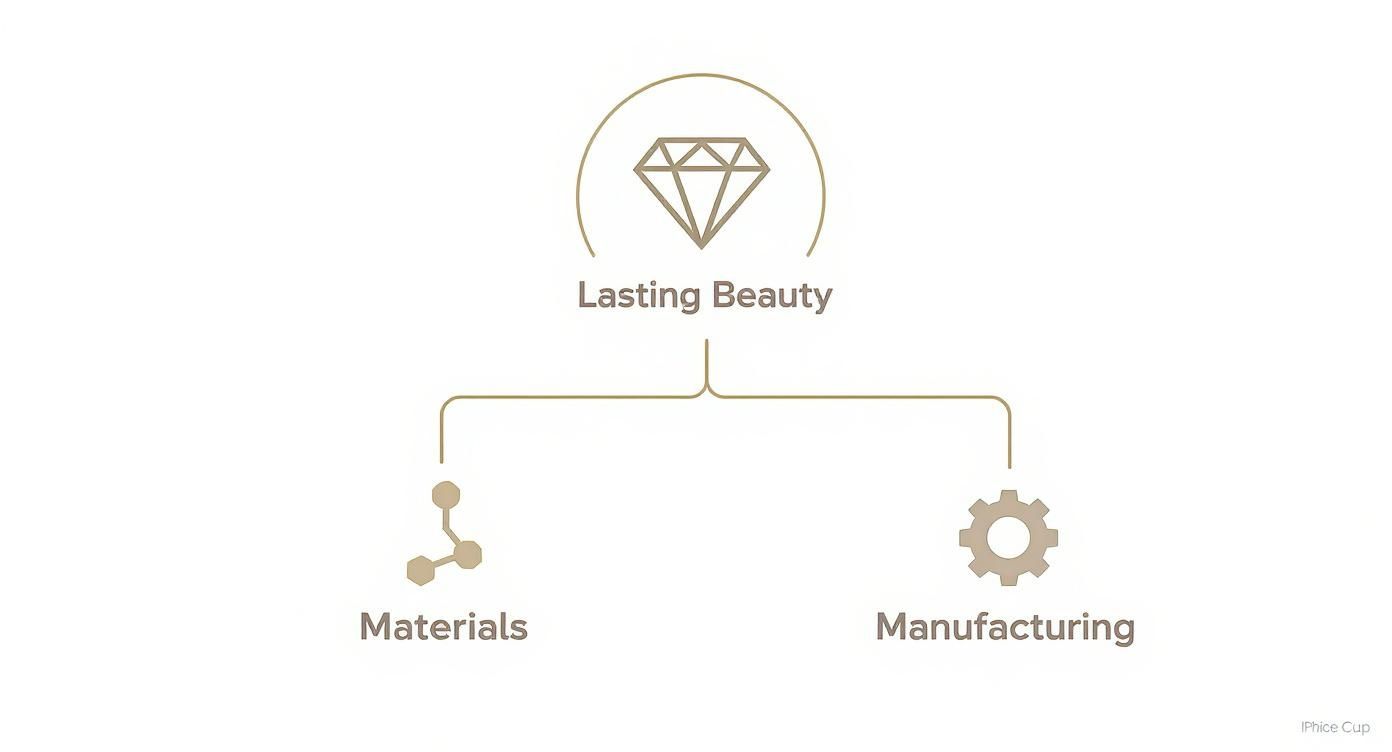
As you can see, the final, stunning piece is a direct result of the building blocks and craftsmanship that came before it.
Solid Gold: The Timeless Classic
Solid gold is, and always will be, the original icon of luxury. When we talk about solid gold for jewelry you can actually wear every day, we're typically talking about 14K or 18K gold. Pure 24K gold is way too soft on its own, so it gets mixed with sturdier metals like copper and zinc to give it the strength it needs to last.
Because the gold is an integral part of the metal's structure, there’s nothing to chip, flake, or wear off. A solid gold necklace simply won't tarnish, making it a phenomenal—though definitely pricey—choice for a true "forever" piece.
Gold-Filled: The Durable Champion
Okay, this is where things get really exciting for those of us who want stunning jewelry we can actually live in! Gold-filled is, without a doubt, the champion of affordable, long-lasting gold jewelry.
Picture a thick, heavy-duty jacket of real gold that has been permanently bonded to a strong base metal, usually jeweler's brass. This isn't just a thin layer of paint; it's a substantial layer of gold fused on with intense heat and pressure.
By law, to be called gold-filled, a piece must contain at least 5% (or 1/20) real gold by weight. That incredibly thick layer makes it super resistant to tarnishing, chipping, or fading. A well-cared-for gold-filled necklace can easily look amazing for 10 to 30 years, giving you the absolute best bang for your buck.
Gold Vermeil: The Delicate Contender
Gold vermeil (you say it like "ver-may") is another popular kid on the block, but it’s playing a different game entirely. For a piece to earn the "vermeil" title, it has to have a sterling silver core and be electroplated with a layer of gold that is at least 2.5 microns thick.
Now, that’s certainly thicker than your average gold plating, but it’s still just a surface coating. Think of it as a really high-quality, thick coat of paint on a premium canvas. It's gorgeous, but with daily wear, friction, and exposure to life's elements, that layer can eventually wear away, exposing the silver underneath—which can then tarnish.
Key Takeaway: For a necklace you plan to wear 24/7—through workouts, showers, and sleep—gold-filled is a much more durable choice than gold vermeil. Its pressure-bonded, thicker gold layer is just built to last.
PVD-Coated Stainless Steel: The Modern Powerhouse
Finally, let's talk about a true marvel of modern jewelry tech: PVD coating on stainless steel. PVD stands for Physical Vapor Deposition, a high-tech process that molecularly bonds a super-thin layer of metal (like gold) to a stainless steel base inside a vacuum chamber.
The result is an unbelievably tough, scratch-resistant, and corrosion-proof finish. Stainless steel itself is already hypoallergenic and doesn’t tarnish. When you add that PVD gold coating, you get a piece that’s practically indestructible and holds its vibrant color through anything. We go into even more detail in our complete guide to tarnish-free jewelry.
It's the perfect material for an active lifestyle, giving you total peace of mind.
To make it even clearer, let's break down how these materials stack up against each other.
Non-Tarnishing Gold Necklace Materials Compared
This table gives you a quick, at-a-glance comparison to help you match the right material to your lifestyle and budget.
| Material | Composition | Durability & Lifespan | Price Point | Best For |
|---|---|---|---|---|
| Solid Gold | An alloy of pure gold (e.g., 14K or 18K) mixed with other metals for strength. | Extremely high. Will not tarnish or fade. A lifetime investment. | $$$$ (Highest) | Heirloom pieces, special occasion jewelry, and those wanting a "forever" item. |
| Gold-Filled | A thick layer of real gold (at least 5% by weight) bonded to a base metal core. | Very high. Can last 10-30 years with proper care. Resists tarnishing and chipping. | $$ (Mid-Range) | Everyday wear, active lifestyles, and the best overall value for durability and beauty. |
| Gold Vermeil | A layer of gold (at least 2.5 microns) electroplated over a sterling silver base. | Moderate. The plating can wear off over time, exposing the silver to tarnish. | $$$ (Mid-to-High) | Occasional wear, special events, and those who are very gentle with their jewelry. |
| PVD-Coated Steel | A thin layer of metal molecularly bonded to a stainless steel base. | Extremely high. Incredibly scratch-resistant and will not tarnish or corrode. | $ (Most Affordable) | High-contact jewelry (rings, bracelets) and anyone with a very active lifestyle. |
Ultimately, choosing the right material is all about knowing how you'll wear your piece. For that perfect blend of daily-wear durability, real gold beauty, and smart value, gold-filled and PVD-coated steel are fantastic choices that won't let you down.
How We Prove a Necklace is Truly “Life-Proof”
A promise is just a word until you back it up. So when a brand slaps a lifetime color guarantee on a non tarnishing gold necklace, that’s a big deal. That kind of confidence doesn’t come from guesswork; it’s earned by putting every single design through the wringer to make sure it can handle your actual, real life.
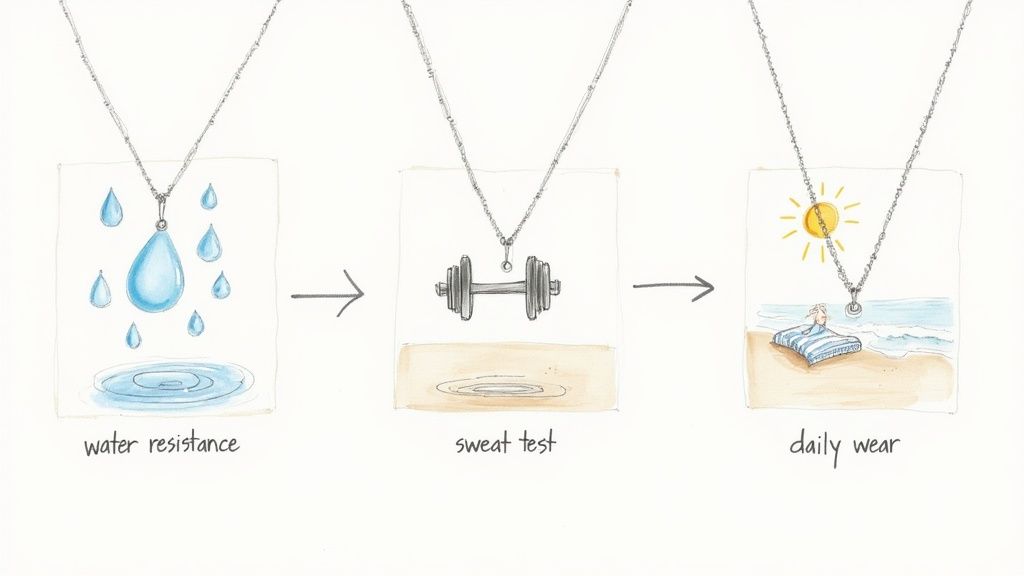
Picture a single necklace going on an adventure. First, it survives a high-intensity workout, getting completely drenched in sweat. Right after, it’s worn into a steamy shower, then for a dip in the ocean, and finally gets spritzed with lotions and perfume. A cheap, poorly made piece would be a discolored mess after the first step, but a genuinely life-proof necklace comes out the other side looking as golden as day one.
This is exactly the kind of hardcore testing that separates the good stuff from the junk. We're not talking about some sterile, controlled lab environment. This is all about simulating the beautiful, messy, and unpredictable reality of your daily hustle.
The Gauntlet of Durability Tests
To stand behind a “non-tarnishing” claim, a necklace has to survive a true gauntlet of challenges designed to push it to its absolute limits. These aren't just simple spot-checks; they’re full-blown simulations of an active, modern lifestyle.
Here’s a peek at what that looks like behind the scenes:
- The Water Immersion Test: We’re talking full submersion. Necklaces are soaked in different kinds of water—chlorinated pool water, salty ocean water, and plain old tap water—for long stretches to ensure there’s zero corrosion or fading.
- The Sweat & Humidity Challenge: Pieces are exposed to conditions that mimic a sweaty gym session or a humid, tropical vacation. This confirms the gold layer holds up and doesn’t react with the acids in your skin.
- The Friction & Wear Simulation: This test is all about recreating the constant rubbing against skin and clothing that a daily-wear necklace goes through. It verifies that the gold layer is thick and bonded securely enough to resist chipping or wearing away.
This dedication to quality is a direct response to what people actually want now. A recent study showed that 68% of buyers are looking for personalized, tarnish-resistant jewelry that fits seamlessly into their lives.
It all comes down to getting real value for your money. Think about it: the average lifespan of a well-maintained non-tarnishing piece, like a gold-filled or PVD-coated necklace, is a staggering 10–15 years. That absolutely crushes the 2–5 year lifespan you'd get from standard gold-plated jewelry. You can discover more insights about long-lasting gold jewelry and see for yourself why it’s such a smart move.
From the Lab to Your Life
When a necklace makes it through these brutal tests, it has officially earned its "life-proof" title. It has proven it can be so much more than a pretty accessory—it can be a reliable, stunning part of your daily uniform. This is how a brand like Wen-Kelli can so confidently offer guarantees that promise your jewelry will keep its color and shine for life.
So when you choose a piece that’s been tested this way, you're not just buying a necklace. You’re investing in total peace of mind and effortless style that keeps up with you, no matter where your day takes you.
Your Smart Shopper’s Checklist for Buying a Non-Tarnishing Gold Necklace
Alright, let's turn you into a jewelry-buying pro. It's easy to feel a bit lost in all the shiny options out there, but once you know exactly what to look for, you'll be able to spot true quality from a mile away.
Think of this checklist as your personal treasure map. Instead of a big red 'X', we're hunting for specific clues that lead straight to a gorgeous, genuinely non-tarnishing gold necklace you'll still be obsessed with years from now.
Step 1: Look for Material Hallmarks
First things first: you need to know exactly what that necklace is made of. Vague descriptions like "gold-colored" are a huge red flag. A brand that’s proud of its quality will be crystal clear about the materials they use.
Keep your eyes peeled for these key terms in the product description:
- 14K Gold-Filled (or 14/20 GF): This is the sweet spot for durable, everyday luxury. That "14/20" stamp is a legal mark guaranteeing the piece is at least 5% (or 1/20th) 14K gold by weight.
- PVD Coated Stainless Steel: This is your signal for modern, high-tech toughness. You get a hypoallergenic, rust-proof steel core with a brilliant gold color bonded right onto the surface. It’s built to last.
- Solid 14K Gold: The ultimate heirloom. This is pure luxury, and it will be clearly marked—and priced—as such.
Step 2: Verify the Brand’s Guarantee
A company's guarantee tells you everything you need to know about how much they believe in their own product. If the warranty is weak or totally missing, that's your cue to find the exit door. You want a brand that stands behind its promises.
A lifetime color guarantee is the ultimate mic drop. It shows the brand has put their jewelry through the wringer and knows it can handle real life. This isn't just a marketing line; it's their commitment to you.
This kind of promise turns a hopeful purchase into a completely risk-free investment in your style.
Step 3: Watch Out for Red Flags
Knowing what to run from is just as crucial as knowing what to look for. Be on the lookout for these classic signs of cheap jewelry that's destined to tarnish:
- Vague Descriptions: Terms like "gold tone," "gold dipped," or "gold colored" are code for a paper-thin layer of plating that will likely rub off before you know it.
- Unbelievably Low Prices: We all love a good deal, but if a price seems too good to be true, it almost certainly is. Quality materials and expert craftsmanship simply cost more than flimsy, disposable fast-fashion pieces.
- No Customer Reviews: Real-world feedback is gold. If a product has zero reviews, you have no way of knowing how it will actually hold up over time.
This demand for transparency is why shoppers are flocking to trustworthy brands. In the US alone, sales of PVD-coated gold necklaces shot up by 18% in a single year, driven by their reputation for durability. It’s all part of a larger trend where 60% of consumers are now actively seeking out brands that use sustainable, high-quality practices. You can dive into the data yourself and see how the rise of non-tarnishing jewelry trends is connecting quality with conscious consumerism.
Keeping Your Gold Gleaming Forever
Let’s be honest, even the most life-proof jewelry shines its brightest with a little TLC. Your non tarnishing gold necklace is built to handle your daily hustle, but a super simple care routine will keep it looking absolutely flawless for decades to come. And the best part? No complicated rituals or harsh chemicals needed.
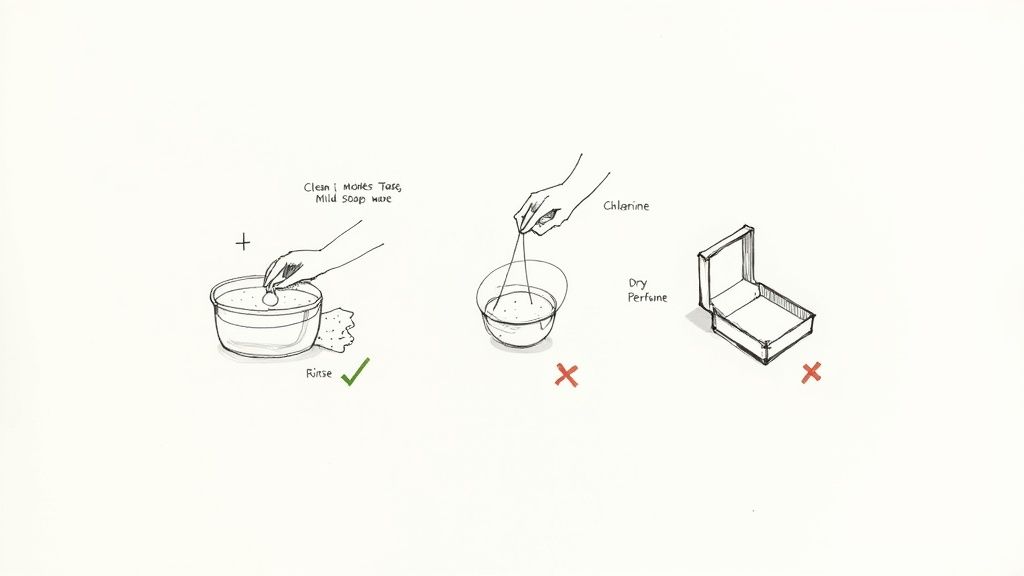
You already have everything you need to keep it looking brand new. A quick, gentle wash with some mild soap and warm water is all it takes to lift away any buildup from lotions, skin oils, or daily life. Just give it a good rinse and pat it completely dry with a soft, lint-free cloth. Easy!
Your Simple Care and Storage Guide
Maintaining that brilliant, out-of-the-box shine is all about forming a few smart habits. Think of it as protecting your investment in style—a few seconds of care here and there goes an incredibly long way.
- Dodge the Harsh Stuff: Your necklace is tough, but it’s not invincible. Keep it away from direct contact with harsh chemicals like chlorine (pools and hot tubs are a no-go!), bleach, and even the stuff hiding in some perfumes and hairsprays. A good rule of thumb is to apply your products first, let them dry, and then put on your jewelry.
- Store It Smartly: When you’re not wearing it, give your necklace its own little home. Tucking it into a soft pouch or a separate compartment in your jewelry box prevents it from getting scratched up by other pieces. This also stops those frustrating tangles before they can even start.
- Clean, Don't Scour: There is absolutely no need for abrasive cleaners or aggressive scrubbing. In fact, that can do more harm than good, potentially wearing down the beautiful gold layer over time. A soft cloth and mild soap are your true best friends here.
Pro Tip: Make cleaning a quick, regular habit! A simple wipe-down after every few wears prevents any serious buildup, which means you'll rarely need to do a deep clean. It’s the easiest way to keep it looking brand new.
Following these simple steps is the secret to getting the absolute most out of your beautiful non-tarnishing gold necklace. For a more detailed walkthrough, you can dive into our full guide to cleaning a gold chain, which is packed with extra tips. This simple approach ensures your favorite piece remains a stunning, reliable part of your style every single day.
Frequently Asked Questions About Tarnish-Free Necklaces
Even after digging into all the details, you might still have a few questions floating around. And that's a great thing! Getting those last few bits of info is the key to feeling 100% confident about your new favorite necklace. Let’s jump into some of the most common questions we hear.
Can I Shower or Swim with My Necklace?
Yes, you absolutely can! This is honestly one of the best things about choosing high-quality materials. Pieces made from 14K gold-filled or PVD-coated stainless steel are built for real life, which means they’re incredibly water-resistant.
You can shower, swim, hit the gym, and just live your life without worrying about the color fading or the shine disappearing.
Just a little pro tip: it’s always a good idea to give your necklace a quick rinse with fresh water after you've been in a chlorinated pool or the ocean. It’s a super simple step that washes away any lingering salt or chemicals, helping your piece stay gorgeous for even longer.
Is Gold-Filled Better Than Gold Vermeil for Daily Wear?
Oh, for daily wear? Gold-filled is the hands-down winner, no contest. It has a much, much thicker layer of real gold that's heat-bonded to the base metal. This process creates an incredibly strong piece that can handle the friction and hustle of everyday life.
Gold vermeil is beautiful, but its gold layer is thinner and applied through electroplating over sterling silver. That makes it a better fit for jewelry you only wear on occasion, since that thinner layer can eventually rub off with constant use.
It's also interesting to know how different base metals can react with your skin. For a deeper dive into that, check out our guide on why some jewelry turns skin green.
How Can I Spot a Genuinely Tarnish-Resistant Piece?
The secret is all in the details. A brand that’s proud of its quality will be totally upfront about what they’re using.
Look for these very specific terms:
- "14K Gold-Filled"
- "PVD Coated Stainless Steel"
- "Solid 14K Gold"
Be a little wary of vague descriptions like "gold tone" or "gold dipped." These usually mean the piece has an ultra-thin plating that won’t last long. The biggest tell of real quality? A solid guarantee, like a lifetime color warranty. That’s a brand putting its money where its mouth is and standing behind its promise of lasting beauty.
Ready to find a necklace that can actually keep up with you? Explore the Wen-Kelli collection of stunning, life-proof jewelry designed for you to wear and love every single day.
